Why the First Minutes After a Sarasota Crash Matter
Key Takeaways: After a car crash in Florida, prioritize safety, medical care, and documentation. Stay at the scene and call 911 when the crash involves injury, death, DUI, hit-and-run, a towed vehicle, commercial vehicle, or at least $500 in property damage. Because Florida uses modified comparative fault, thorough scene documentation, photos, witness details, and insurance information, is critical. As a no-fault state, Florida requires PIP coverage, and you generally must receive initial medical care within 14 days to preserve those benefits. Obtain your official crash report, which may take up to 10 days, and promptly notify your insurer. Following these steps protects your health and legal rights, and a knowledgeable Sarasota car accident attorney can help you navigate deadlines and pursue full compensation.
The moments after a collision can feel chaotic and overwhelming. You may be shaken, in pain, or worried about your vehicle and loved ones. Knowing what to do after a car accident in Florida helps you stay calm, protect your health, and preserve evidence that supports future claims. This guide walks Sarasota drivers through the lawful steps to take when a crash turns an ordinary drive into an emergency.
If you were injured through no fault of your own, Greg Linehan Law is here to guide you. Call us at 941-559-4529 or request your free case review to learn how Florida law applies to your situation. There are never upfront costs to speak with us.
A Practical Guide to What to Do After a Car Accident in Florida
Your first priorities are safety, medical care, and documentation, in that order. Florida law places clear duties on drivers at the scene. Following them protects both your well-being and legal rights.
Stay at the Scene and Call 911
Leaving a crash scene can carry serious legal consequences, so remain and summon help. Florida guidance instructs motorists to stay at the scene and call 911, consistent with Fla. Stat. § 316.065. Reporting immediately gets emergency responders moving and creates an official record.
💡 Pro Tip: If safe and you are not seriously hurt, move vehicles out of active lanes to prevent a second collision, then wait for responders in a protected spot away from traffic.
Know When Law Enforcement Must Respond
Not every fender bender requires an officer, but many Florida crashes do. Law enforcement should be notified immediately when a collision involves:
- An injury or fatality
- A driver suspected of impairment (DUI)
- A hit-and-run
- A vehicle that must be towed
- A commercial motor vehicle
- At least $500 in apparent property damage
Review these obligations through the state’s official crash reporting resources. When in doubt, calling is usually safer.
Documenting the FL Car Crash Scene to Protect Your Claim
Evidence gathered in the first hour is often the strongest evidence you will ever have. Florida follows modified comparative fault under Fla. Stat. § 768.81, as amended by HB 837 effective March 24, 2023. Contributory fault reduces damages proportionately, but under § 768.81(6), any party found more than 50 percent at fault for their own harm may not recover damages. Because your recovery can be reduced or barred, thorough scene documentation is critical to countering later blame-shifting.
The statute also allows defendants to point to nonparty fault. Under Florida’s comparative fault framework, defendants must affirmatively plead and identify nonparties as specifically as practicable. Identifying every vehicle, driver, witness, and road condition helps preserve your ability to respond if the other side later blames an absent party.
If physically able, try to capture:
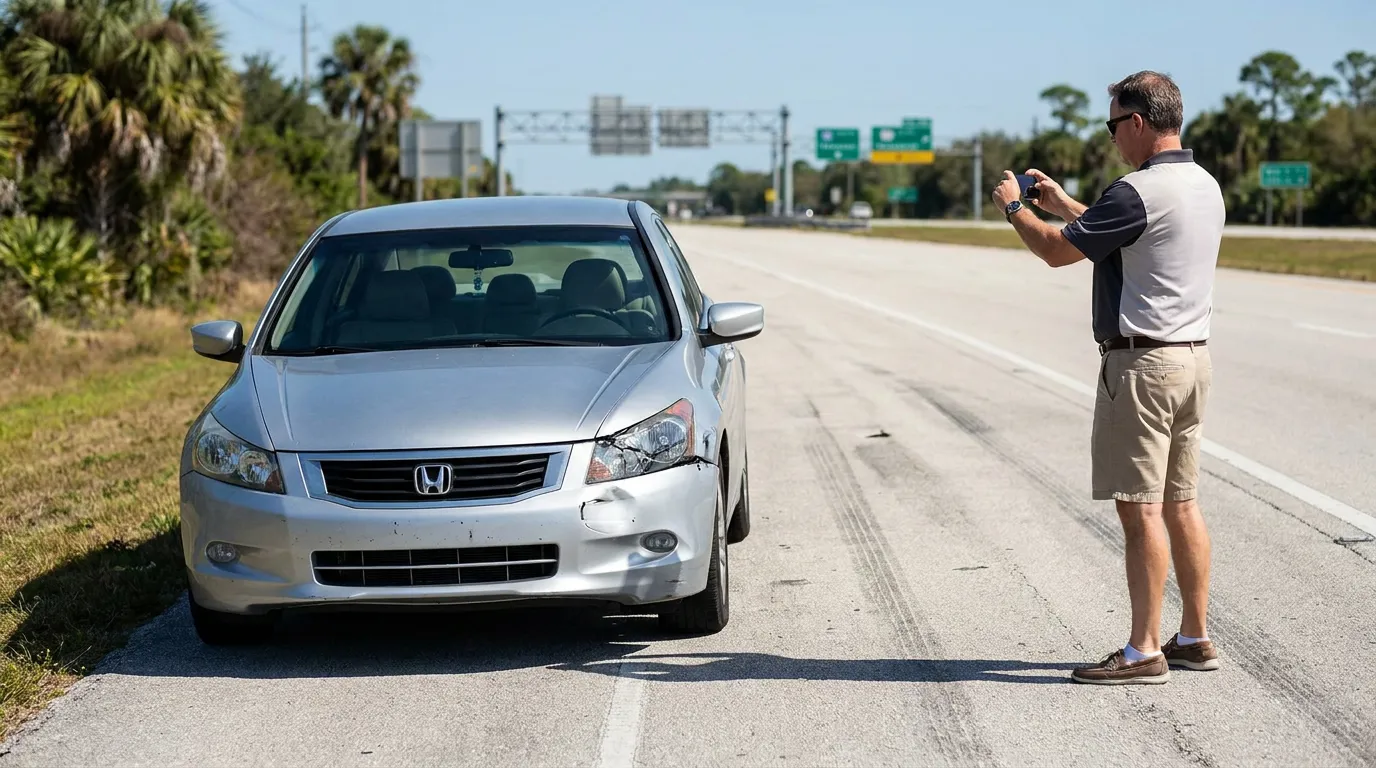
- Photos of all vehicles, license plates, and damage
- Wide shots showing the road, signs, signals, and skid marks
- Names and contact information for drivers and witnesses
- Insurance details and the responding officer’s information
💡 Pro Tip: Weather, lighting, and construction change quickly. Time-stamped phone photos and a voice memo describing what happened preserve details that memory alone may lose.
Understanding Florida’s No-Fault PIP System
Florida is a no-fault state, which means your own insurance often pays your early medical bills regardless of fault. Drivers are generally required to carry Personal Injury Protection (PIP) under Fla. Stat. § 627.736, which provides benefits to the named insured and relatives residing in the same household. PIP covers you whether or not you were at fault, up to policy limits minus any deductible.
Prompt medical care is not just good for your health; it is a condition of PIP eligibility. You generally must receive initial care within 14 days of the motor vehicle crash to remain entitled to PIP benefits. Missing that window can jeopardize coverage, so seeking evaluation quickly is crucial.
Read the full statutory framework in Florida’s no-fault insurance statute. Under Fla. Stat. § 627.736(4)(b), PIP benefits are considered overdue if the insurer does not pay within 30 days after receiving written notice of the covered loss and its amount.
| PIP Feature | What Florida Law Generally Provides |
|---|---|
| Medical expenses | 80% of reasonable and necessary costs |
| Lost wages | 60% of income lost due to the crash |
| Who may be covered | You, household relatives, certain passengers, pedestrians, and bicyclists |
| Treatment deadline | Initial care generally within 14 days |
💡 Pro Tip: Cooperate with reasonable insurer-requested medical examinations. Under § 627.736, unreasonable refusal to appear can end the carrier’s liability for later PIP benefits.
Reporting and Records After Florida Car Crash Steps
Getting the official crash report is an essential part of the Florida car crash steps. Traffic crash reports are governed by Fla. Stat. § 316.066, and reports may take up to 10 days to become available. These records are exempt from public disclosure, but parties involved may obtain them.
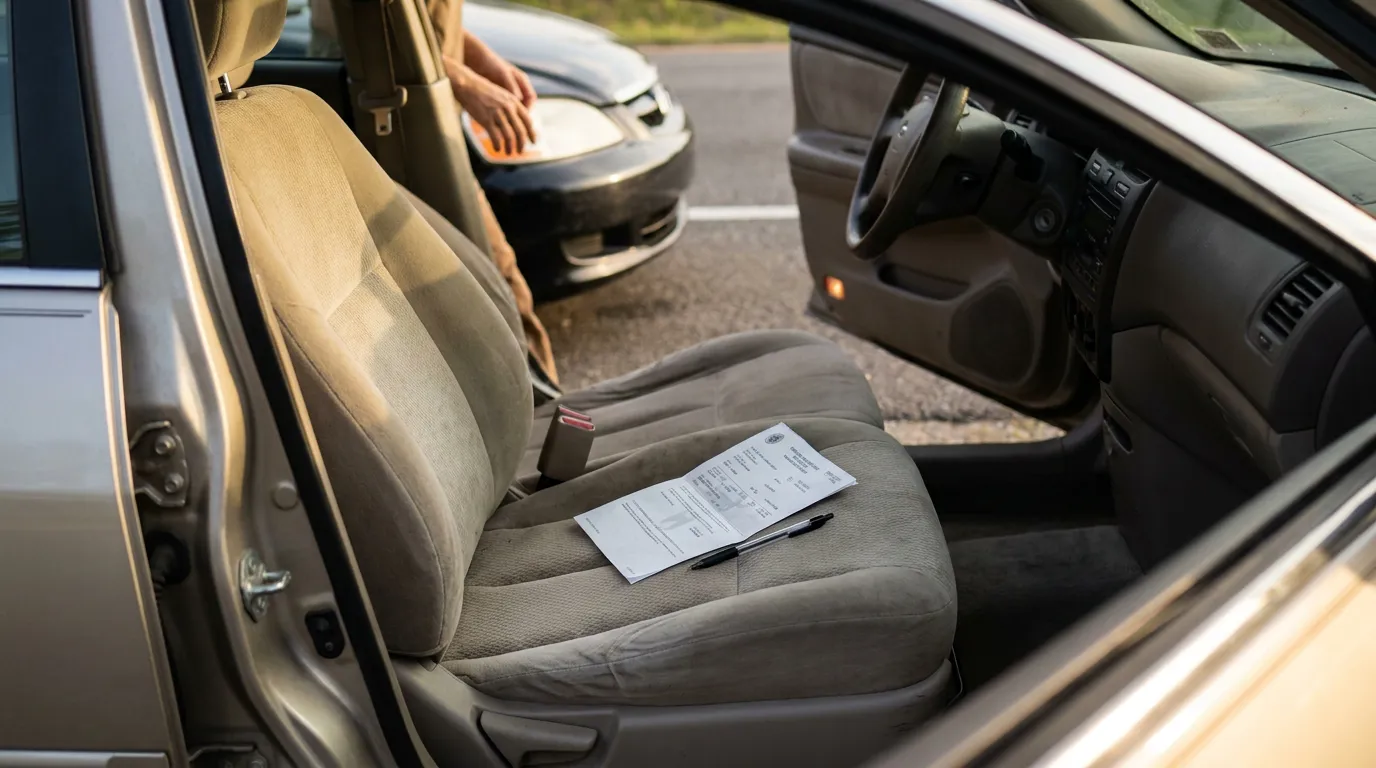
For minor collisions that do not meet mandatory reporting thresholds, Florida allows self-reporting. Drivers may complete a "Driver Report of a Traffic Crash" form in lieu of an officer report. A completed self-report may be emailed to the state’s designated crash reporting address, giving you documented proof even when police do not respond.
You should also notify your own insurer promptly. Under Fla. Stat. § 627.736(4)(a), an insurer may require written notice as soon as practicable after a crash. Early notice protects your benefits and helps avoid disputes over delay.
💡 Pro Tip: Keep a single folder, digital or paper, for your crash report number, medical records, wage documentation, and insurer correspondence. Organized records make proving your losses far easier.
How a Sarasota Car Accident Attorney Can Help
Insurance companies handle claims daily, and injured drivers rarely have that experience. Working with a knowledgeable Sarasota car accident lawyer can help you understand deadlines, preserve evidence, and pursue full compensation when injuries are serious. Greg Linehan brings more than 26 years of experience and a hands-on approach, so clients work directly with him rather than being passed around a large firm.
Our roots run deep in this community, and our record reflects consistent recognition for client service. Greg Linehan has been honored as a 2025 Super Lawyer and recognized by the Florida Justice Association, and he serves as President of Suncoast Charities for Children. For a broader walkthrough of the process, our detailed Florida car accident guide offers additional context on protecting your claim. Outcomes always depend on the specific facts, so nothing here should be read as a promise of any particular result.
Frequently Asked Questions
- Do I have to call the police after every crash in Florida?
Not always, but you generally must notify law enforcement for crashes involving injury, death, DUI, hit-and-run, a towed vehicle, commercial vehicle, or at least $500 in damage. For minor crashes below that threshold, you may self-report. When unsure, calling is usually safer.
- How soon must I see a doctor to keep my PIP benefits?
Under Florida’s no-fault framework, you generally must receive initial medical services within 14 days of the crash to remain eligible for PIP benefits. Even minor symptoms can worsen, so prompt evaluation protects both your health and claim, subject to policy terms.
- What is comparative fault, and how could it affect my recovery?
Under Fla. Stat. § 768.81, as amended in 2023, a jury may assign fault percentages to each party, and your compensation is reduced by your share. Under the modified rule codified in § 768.81(6), any person found more than 50% at fault for their own injuries is completely barred from recovering damages in most negligence cases. Because defendants may also blame nonparties, gathering thorough scene evidence is important.
- When will my crash report be available?
Under Fla. Stat. § 316.066, a traffic crash report may take up to 10 days to become available. The report is generally exempt from public disclosure, but parties involved in the crash may request a copy.
- How long do I have to file a lawsuit after a Florida crash?
Civil deadlines are set by statute and vary based on specific facts and parties, and courts interpret exceptions narrowly. Under HB 837, the statute of limitations for most negligence claims was shortened from four years to two years for causes of action accruing after March 24, 2023. Because these deadlines differ from insurance timelines, consult counsel promptly rather than assume extensions apply.
Protecting Your Rights After a Collision
Knowing what to do after a car accident in Florida turns a frightening moment into manageable, protective actions. Stay at the scene, call for help, seek prompt medical care, document everything, notify your insurer, and secure your crash report. These steps support your health first and your legal claim second, while Florida’s no-fault and modified comparative fault rules shape how compensation unfolds. Every case is unique, so the right guidance always depends on your specific facts.
When you are ready, our team is here to help you move forward with clarity and care. Reach out to Greg Linehan Law for your 100% free case review, call 941-559-4529, or contact us now to discuss your options. You pay nothing unless we win on your behalf.
This blog is for informational purposes only and does not constitute legal advice. Contact Greg Linehan Law to discuss your specific case.