Dedicated Sarasota Bicycle Accident Lawyers for Injury Claims
Riding a bike in Sarasota offers a sense of freedom and a front-row seat to some of the most beautiful views in Florida, but that joy can vanish in an instant when the unexpected happens. One moment, you are pedaling along a trail or commuting to work, and the next, you are facing a painful recovery because of an unexpected injury. You should not have to fight for fair treatment while you are trying to heal from injuries that were not your fault. At Greg Linehan Law, we understand the fear and frustration that comes after an accident, and our team is here to lift that legal burden off your shoulders so you can focus on getting your life back on track.
Contact us today at 941-559-4529 to discuss your case and learn how we can help you.
Key Takeaways
- Bicycle accidents happen in more places than you might expect: Crashes occur on public roads, private property, parking lots, trails, and sidewalks — and the location determines which laws apply and who is liable for your injuries.
- Drivers are typically liable when they fail to share the road safely: Because bicycles are legally considered vehicles in Florida, motorists who cut off, tailgate, or door a cyclist in violation of traffic laws can be held fully responsible.
- Being partially at fault does not eliminate your right to recover: Under Florida’s modified comparative fault law, you can still pursue compensation as long as you are 50% or less responsible — though your award will be reduced by your share of fault.
- Compensation goes well beyond emergency room bills: A serious bicycle accident can affect your ability to work, your long-term health, and your quality of life — recoverable damages include lost wages, future medical care, and pain and suffering.
How Can a Sarasota Bicycle Accident Lawyer Help You Recover?
Sarasota’s landscape is bustling with activity, and unfortunately, it is not always safe for cyclists. When negligence turns a peaceful ride into a life-altering event, you need a bicycle accident lawyer who understands the unique dynamics of these crashes. Regardless of how the accident occurred, proving liability requires a deep understanding of Florida law. We are here to identify the responsible party, gather crucial evidence, and demand the compensation you deserve, so that you don’t have to navigate the complex legal system alone.
Common Types of Bicycle Accidents in Sarasota and Who Is Liable
Many people assume that bike crashes constantly involve a car hitting a cyclist on a highway, but accidents occur in many different ways and locations. The specific circumstances of your crash determine which laws apply and who is responsible for your injuries.
- Collisions on public roadways. Serious crashes often occur when drivers overtake cyclists too closely, turn into their path, or open doors into traffic. Since bicycles are legally considered vehicles, drivers who violate traffic laws or fail to exercise due care are typically liable.
- Private property hazards. Accidents in parking lots or driveways often involve hidden obstacles, such as construction debris or equipment left in your path. If you are on the property with permission, the owner may be responsible for failing to remedy these unsafe conditions.
- Accidents on trails and sidewalks. Crashes here often result from reckless cyclists cutting you off or distracted pedestrians stepping into your right-of-way. In these scenarios, the negligent individual can be held personally liable for the damages their negligence caused.
By identifying exactly how your accident occurred, we can pinpoint the correct insurance policies to pursue for your recovery.
Insurance Companies Often Blame the Cyclist
After a bicycle accident, insurers may claim you were riding unpredictably, outside the bike lane, or failed to follow traffic rules.
These arguments are often used to reduce compensation. A Sarasota bicycle accident lawyer can help protect your rights and push back against unfair blame.
What If I Was Partially at Fault for My Sarasota Bicycle Accident?
Insurance companies often try to shift the blame onto the cyclist to avoid paying a full settlement. They might argue you were riding too fast for conditions, lacked proper lighting, or were on a part of the trail where bikes are prohibited. However, being partially at fault does not automatically mean the judge will dismiss your case. Florida follows a modified comparative fault law, which impacts your claim in specific ways:
- Percentage of fault. The court or insurance adjusters assign a percentage of blame to each party involved.
- Reduced recovery. The court will reduce your award by your percentage of fault (e.g., if you are 20% at fault, you receive 80% of the award.
- The 51% bar. If you are more than 50% responsible for the accident, you cannot recover any damages from the other party.
When you’re represented by Greg Linehan Law, we can aggressively fight back against unfair blame to protect your right to compensation.
What Compensation Can Sarasota Bicycle Accident Victims Recover?
A bicycle accident attorney helps you look beyond immediate emergency room bills to understand the full cost of your injury. A serious crash can impact your ability to work, your enjoyment of life, and your long-term health.
Potential compensation could include:
- Medical expenses. This includes ambulance fees, surgeries, rehabilitation, and future medical care required for chronic issues.
- Lost wages. We calculate the income you lost while recovering and any loss of future earning capacity if you cannot return to your job.
- Noneconomic damages. You can be compensated for physical pain, emotional trauma, and the loss of enjoyment of life.
Our goal is to secure a settlement that fully compensates you for both your financial losses and personal suffering.
Why Sarasota Cyclists Choose Greg Linehan Law After a Crash
- Knowledge of Sarasota’s Cycling Infrastructure and Hazard Zones — From The Legacy Trail to the Ringling Blvd bike lanes and the Sarasota bayfront path, Greg Linehan understands the local routes and the common driver behaviors that cause cyclist injuries.
- Thorough Accident Reconstruction — The firm works with experts who can analyze road conditions, traffic signals, driver sightlines, and vehicle data to establish exactly what the driver did wrong.
- Maximizing Damages for Serious Cyclist Injuries — Bicycle accidents frequently cause long-term harm. Greg Linehan Law builds claims that account for ongoing medical care, lost cycling ability, pain, and diminished quality of life.
- Countering Comparative Fault Arguments — Insurers routinely claim the cyclist was partly to blame. Greg Linehan Law challenges those arguments with traffic law analysis and evidence of the driver’s negligence.
- Familiarity with Sarasota County Courts — Decades of practice before local judges means Greg Linehan knows how bicycle accident cases are evaluated in Sarasota County and can prepare your case accordingly.
- No Fee Unless We Win — Your free case review is the first step, and you pay nothing in attorney fees unless Greg Linehan Law successfully recovers compensation for your bicycle accident injuries.
Why Choose Greg Linehan Law as Your Cycling Accident Law Firm in Sarasota, FL?
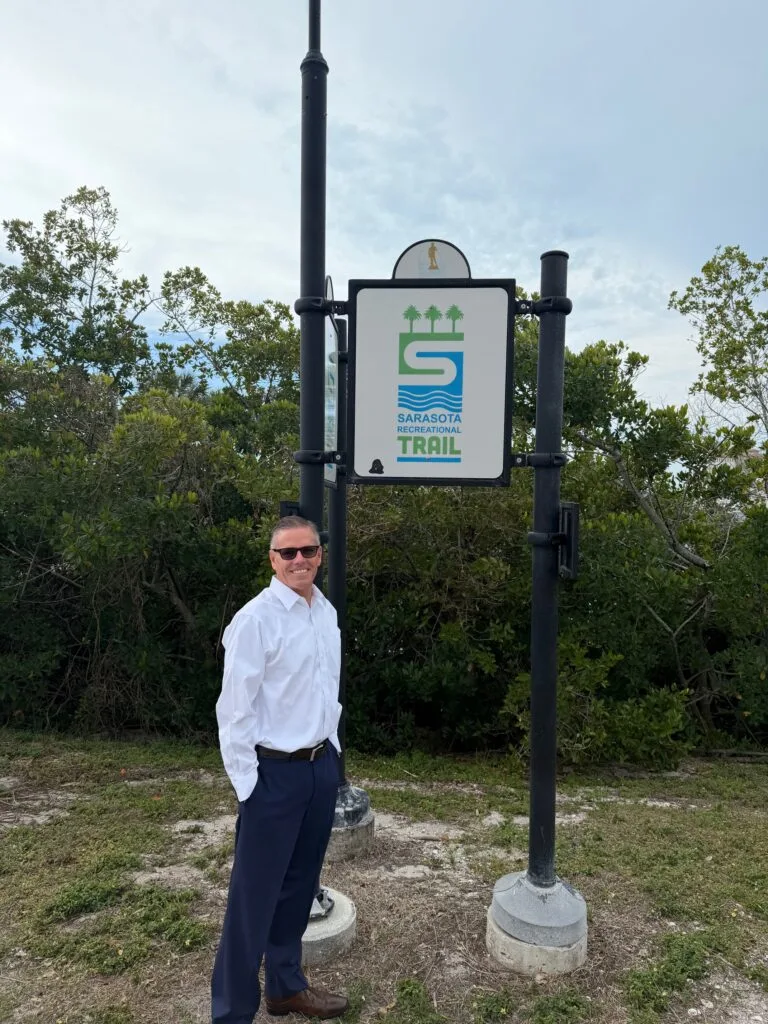
You are choosing a legal team with nearly three decades of experience, built on a philosophy of respect and transparency. Greg Linehan Law understands how to construct strong cases, navigate insurance pitfalls, and achieve tangible results for injury victims in Sarasota.
Our firm is deeply rooted in this community and is a committed member of the Sarasota Chamber of Commerce. We will always work diligently to advocate for our neighbors. We are proud to be recognized as one of the Top 100 Lawyers by The National Trial Lawyers, named a Lawyer of Distinction in 2024, and honored by Super Lawyers in 2025.
When you work with us, you get a trusted advocate who treats your case with the utmost importance, because it truly matters.
Call Us Today to Secure Your Tomorrow in Sarasota, FL
Don’t let an insurance company or a negligent property owner dictate your future. Contact Greg Linehan Law today to schedule your 100% free, no-obligation case review. We are ready to provide the bike crash legal help you need to move forward with confidence.
Early Evidence Can Make or Break Your Case
Photos of the crash scene, damaged bicycle parts, witness statements, surveillance footage, and medical records can become critical evidence in a bicycle accident claim.
Taking action quickly helps preserve the information needed to prove liability and maximize your recovery.
Bicycle Accident FAQs for Sarasota Riders
When Should I Hire a Bicycle Accident Lawyer?
You should hire a lawyer as soon as possible after the accident to preserve evidence and to handle communications with insurance companies before they try to minimize your claim. An attorney can take that stress off your hands and advocate for you.
How Much Does a Bicycle Accident Attorney Cost?
Greg Linehan Law works on a contingency fee basis, meaning you pay no upfront costs and only pay legal fees if we successfully recover money for you.
What Evidence Should I Bring to My Lawyer?
Bring a copy of the police report, photos of the accident scene and your injuries, medical records, and any correspondence you have received from insurance companies.
What should I do immediately after a bicycle accident in Sarasota, FL?
After a bicycle accident in Sarasota, FL, your first priority should be your health and safety. Move to a safe location if possible and call 911 to report the accident and request medical help. Seek medical attention immediately, even if your injuries seem minor. If you are able, take photos of the scene, your bicycle, the vehicle involved, road conditions, and your injuries. Collect contact information from the driver and any witnesses. Avoid discussing fault or giving statements to insurance companies before speaking with an attorney. At Greg Linehan Law, we help injured cyclists protect their rights and pursue fair compensation. Contact us today for a free consultation.
What damages can I recover after a bicycle accident in Sarasota?
After a bicycle accident in Sarasota, you may be able to recover both economic and non-economic damages. Economic damages can include medical expenses, future medical treatment, lost wages, and reduced earning capacity. Non-economic damages may include pain and suffering, emotional distress, and loss of enjoyment of life. In some cases involving extreme negligence, punitive damages may also be available. A Sarasota bicycle accident attorney can evaluate your case and help determine the full value of your claim.
Will my bicycle accident case go to trial or settle out of court?
Most bicycle accident cases are resolved through settlement negotiations with the insurance company and do not go to trial. However, if liability is disputed or the insurer refuses to offer fair compensation, your case may proceed to litigation. Factors such as the severity of injuries, available insurance coverage, and complexity of fault can influence the outcome. At Greg Linehan Law, we prepare every case as if it will go to trial to maximize your chances of a strong recovery.
How much is my Sarasota bicycle accident case worth?
The value of a Sarasota bicycle accident case depends on several factors, including the severity of your injuries, medical costs, lost income, long-term disability, and pain and suffering. Cases involving permanent injuries or significant financial losses are typically worth more. Liability and insurance policy limits also play a major role in the final settlement amount. Because every case is unique, a detailed review by a Sarasota bicycle accident lawyer is necessary to estimate its true value.
Can weather conditions affect liability in a bicycle accident case?
Yes, weather conditions such as rain, fog, or low visibility can affect liability in a bicycle accident case, but they do not eliminate responsibility. Drivers are still required to operate their vehicles safely based on conditions, including reducing speed and maintaining proper lookout. If a driver fails to adjust for weather and causes an accident, they may still be held liable. A bicycle accident attorney can evaluate how weather factors impact your specific case.
How do insurance companies try to deny bicycle accident claims in Sarasota, FL?
Insurance companies often try to minimize or deny bicycle accident claims by arguing that the cyclist was partially or fully at fault, disputing the severity of injuries, or claiming lack of evidence. They may also request recorded statements to use against the injured party or offer low early settlements before the full extent of injuries is known. Having legal representation helps protect your rights and ensures your claim is properly valued and supported with evidence.
Can I file a claim if road debris or potholes caused my bicycle accident?
Yes, you may be able to file a claim if your bicycle accident was caused by road debris or potholes, depending on who was responsible for maintaining the roadway. In some cases, a city, county, or property owner may be liable if they knew or should have known about the dangerous condition and failed to fix it in a reasonable time. These cases can be more complex and often involve special legal procedures when government entities are involved.
Local Resources in Sarasota, FL
If you’ve been injured in Sarasota, these trusted local resources can assist you with emergency care, reporting, transportation, and vehicle repairs. While these services can help in the immediate aftermath, speaking with a lawyer as soon as possible can help protect your rights and your claim.
Police & Public Safety
- Sarasota Police Department – 2099 Adams Lane, Sarasota, FL 34237. Handles local law enforcement, investigations, and accident reports within Sarasota city limits. Call (941) 263-6773 for non-emergency assistance or to request records. Visit Website
- Florida Highway Patrol – Troop F – 680 U.S. 41 Bypass N Suite 4, Venice, FL 34285. Responds to accidents on highways and major roadways throughout Sarasota County, including I-75 and U.S. 41. Call +1 941 751 8350 for highway accident assistance and report inquiries. Visit Website
- Sarasota County Sheriff’s Office – 2071 Ringling Blvd, Sarasota, FL 34237. Handles law enforcement services and accident investigations in unincorporated Sarasota County areas. Call (941) 861-5800 for assistance or records requests. Visit Website
Accident Reports & Records
- Sarasota Police Department Records Division – Obtain official accident reports for crashes that occurred within Sarasota city limits. Call 941-263-6045 for report requests and records assistance. Visit Website
- Florida Highway Patrol Crash Reports – Request accident reports for collisions investigated by FHP on highways and state roads throughout Sarasota County. Request Report
- Sarasota County Sheriff’s Office Records Division – 2071 Ringling Blvd, Sarasota, FL 34237. Handles accident and incident reports for crashes occurring in unincorporated Sarasota County. Call (941) 861-4025 for assistance. Visit Website
Medical & Emergency Care
- Sarasota Memorial Hospital – 1700 S Tamiami Trail, Sarasota, FL 34239. Full-service hospital with a 24/7 emergency room, trauma care, surgery, and advanced medical services for accident victims and emergencies. Call (941) 917-9000. Visit Website
- HCA Florida Sarasota Doctors Hospital – 5731 Bee Ridge Rd, Sarasota, FL 34233. Provides emergency medical treatment, trauma stabilization, imaging, and specialized care for injuries and medical emergencies. Call (941) 342-1100. Visit Website
- Lakewood Ranch Medical Center – 8330 Lakewood Ranch Blvd, Lakewood Ranch, FL 34202. Offers emergency care, diagnostic imaging, surgical services, and inpatient treatment for accident-related injuries. Call (941) 782-2100. Visit Website
Towing & Roadside Assistance
- Jim’s Towing Service – Provides 24/7 emergency towing, roadside assistance, vehicle recovery, and accident towing services throughout Sarasota and surrounding areas. Call +1 941-921-6792. Visit Website
Collision Repair & Auto Body Shops
- Caliber Collision – Sarasota – 1527 Cattlemen Rd, Sarasota, FL 34232, United States. Trusted nationwide collision repair provider offering insurance coordination, dent repair, painting, and lifetime warranties on repairs. Call +1 941-377-6474. Visit Website.
- Gerber Collision & Glass – 3931 N Washington Blvd, Sarasota, FL 34234, United States. Full-service collision repair and auto body shop specializing in post-accident vehicle restoration and glass repair. Call +1 941-294-2152. Visit Website
Auto Repair & Mechanics
- Dion’s Automotive Repair – 5308 Ashton Ct, Sarasota, FL 34233, United States. ASE-certified auto repair shop offering engine diagnostics, brake repair, transmission service, and preventative maintenance. Call +1 941-926-4942. Visit Website
- Brian’s Auto Repair – 4502 McAshton St, Sarasota, FL 34233. Full-service automotive repair facility specializing in post-accident mechanical repairs, inspections, and maintenance services. Call +1 941-926-2526. Visit Website
Rental Car Services
- Enterprise Rent-A-Car – 1003 N Washington Blvd, Sarasota, FL 34236, United States. Offers insurance replacement rentals, daily vehicle rentals, and long-term rental options for accident victims and travelers. Call +1 941-365-7228. Visit Website
- Hertz Car Rental – 6000 Rick Piccolo Cir, Sarasota, FL 34243, United States. Provides short-term and long-term vehicle rentals, including insurance replacement options near Sarasota-Bradenton International Airport. Call +1 941-355-8848. Visit Website
- Budget Car Rental – 6018 Rick Piccolo Cir, Sarasota, FL 34243, United States. Offers affordable rental vehicles, insurance replacement rentals, and flexible transportation options throughout Sarasota. Call +1 941-359-5360. Visit Website
Transportation Services
- Sarasota County Area Transit (SCAT) – Provides public bus transportation services throughout Sarasota County, including routes connecting hospitals, courts, and downtown Sarasota. Call (941) 861-5000. Visit Website
Mental Health & Support
- Centerstone – Sarasota – 379 6th Ave W, Bradenton, FL 34205. Provides counseling, trauma therapy, crisis intervention, and mental health support services for individuals recovering from accidents and injuries. Call +1 941-782-4150. Visit Website
- SAMHSA National Helpline – Free, confidential, 24/7 mental health and substance use treatment referral and information. Call 1-800-662-HELP (4357)—. Visit Website
Your Recovery Matters — Let Us Help You Move Forward
A bicycle accident can leave you dealing with painful injuries, lost income, and uncertainty about the future. You should not have to battle insurance companies while trying to recover. Greg Linehan Law is prepared to investigate your accident, protect your rights, and fight for the compensation you deserve. Contact us today to discuss your Sarasota bicycle accident case.
Get My 100% Free Consultation →
No fee unless we recover for you.