
Riding Without a Helmet in Florida: What the Law Actually Requires
Key Takeaways: Florida law generally requires helmets for all motorcycle operators and passengers under Fla. Stat. § 316.211(1), and approved eye protection for operators under § 316.211(2); the age-based exemption generally applies only when a rider over 21 also carries at least $10,000 in medical benefits coverage for motorcycle crash injuries. Both conditions generally must be met at once, so turning 21 alone may not create a legal right to ride bareheaded. A standard auto policy with $10,000 in PIP may not automatically extend to motorcycles, among the most common and costly misunderstandings riders face. Riders 21 and under are generally not eligible for the insurance exemption, while a separate carve-out may cover very low-powered motorcycles and enclosed cabs under § 316.211(3)(a). A helmet violation is generally a noncriminal traffic infraction, and going without a helmet does not necessarily bar recovery from a negligent driver, though insurers may raise it to argue increased injury severity. Confirming your policy language in writing before you ride and preserving evidence after a crash are steps within a rider’s control.
Picture a warm Sunday morning ride down Tamiami Trail, helmet strapped to the sissy bar instead of your head. Many Florida riders believe turning 21 alone gives them freedom to ride bareheaded, but that’s generally only half the rule. Under Fla. Stat. § 316.211(3)(b), a person over 21 may legally go without protective headgear only if covered by an insurance policy providing at least $10,000 in medical benefits for motorcycle crash injuries. Age and $10,000 medical benefits coverage generally work together, not separately.
If you were hurt in a crash and an adjuster is questioning your helmet use or coverage, our team at Greg Linehan Law is ready to listen. Call 941-559-4529 or reach out for a free case review to talk through what happened.
The Default Rule Under Statute 316.211
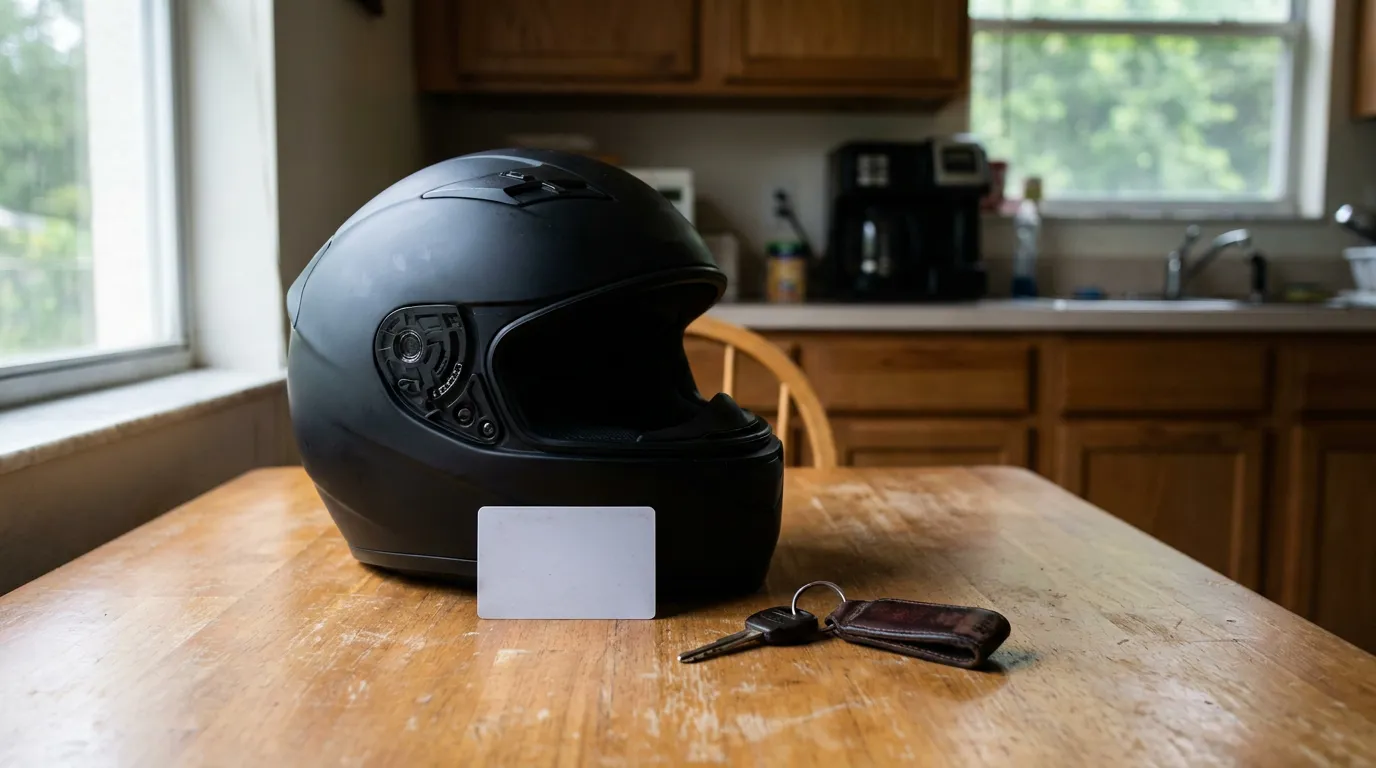
Florida’s starting point is generally a mandatory helmet requirement for everyone on a motorcycle. Under Fla. Stat. § 316.211(1), a person may not operate or ride a motorcycle unless properly wearing protective headgear complying with Federal Motor Vehicle Safety Standard 218. Subsection (2) requires a department-approved eye-protective device for operators, and § 316.211(3)(a) exempts persons riding within an enclosed cab. The headgear rule generally applies to operators and passengers alike, while eye protection targets the operator.
The exemptions are carve-outs from this default, not the general rule. Anyone who cannot meet an exemption’s conditions generally remains subject to the helmet mandate. Riders wanting the full picture of equipment, licensing, and roadway rules can review our overview of motorcycle riding laws in Florida.
Understanding the Florida Motorcycle Helmet Law Insurance Requirement
The insurance-based exemption generally has two elements that must both be satisfied at the time of the ride. The rider must be over 21 and covered by a policy providing at least $10,000 in medical benefits for motorcycle crash injuries. Meeting only one element generally leaves a rider outside the helmet exemption Florida recognizes.
This is where confusion often begins. Florida’s rider coverage requirement under § 316.211(3)(b) is generally not the same as standard auto no-fault coverage. Under Fla. Stat. § 627.736(1), a motor vehicle policy must provide personal injury protection up to $10,000 in medical and disability benefits and $5,000 in death benefits, yet motorcycles are generally not "motor vehicles" for PIP purposes under § 627.732, so PIP generally does not extend to them. The dollar figure matches; the coverage does not automatically follow.
What Riders Often Get Wrong About Coverage
Assuming a car policy covers a motorcycle ride is among the most common and costly mistakes we see. Many riders assume medical benefits coverage travels with them onto the bike, only learning otherwise after a collision when bills arrive. Confirming the specific policy language with your carrier before you ride is a practical safeguard.
💡 Pro Tip: Ask your insurer for written confirmation that your policy provides at least $10,000 in medical benefits for injuries sustained while operating or riding a motorcycle, and keep a copy with your registration.
The Separate Low-Powered Motorcycle Exemption
A second exemption generally has nothing to do with insurance. Under Fla. Stat. § 316.211(3)(a), the section generally does not apply to a person 16 or older operating a motorcycle powered by a motor of 50cc or less, or rated no more than 2 brake horsepower, and incapable of exceeding 30 mph on level ground. These measures are stated in the alternative, but the 30-mph limit generally must also be satisfied, so this carve-out covers a narrow category of very low-powered machines.
Separately, Fla. Stat. § 316.2128(2)-(3) provides that a motorized scooter or micromobility device is not required to satisfy the registration and insurance requirements of § 320.02, and no driver license is required to operate one. Those devices generally sit outside the § 316.211 framework, though local ordinances may impose their own rules.
Riders Under 21 and the Special License Plate Rule
Florida generally does not extend the insurance exemption to riders who are not over 21. Helmet use is generally mandatory for that group regardless of insurance. Fla. Stat. § 316.211(6) requires each motorcycle registered to a person under 21 to display a license plate unique in design and color, which may help law enforcement identify riders subject to the mandate.
Registration itself carries a safety component. Under Fla. Stat. § 320.08(1)(a),(c), motorcycle registration is "$10 flat" plus "a nonrefundable motorcycle safety education fee in the amount of $2.50," which funds rider safety and education programs. Other statutory fees and local taxes may also apply at registration.
| Rider Situation | Helmet Required? | Governing Provision |
|---|---|---|
| Rider under 21 | Generally yes | § 316.211(1), (6) |
| Rider over 21 with $10,000 medical benefits | Generally no, if coverage is in force | § 316.211(3)(b) |
| Rider over 21 without qualifying coverage | Generally yes | § 316.211(1) |
| Rider 16+ on qualifying low-powered motorcycle | Generally no | § 316.211(3)(a) |
What Happens If You Ride Without Qualifying Coverage
A helmet violation in Florida is generally handled as a traffic matter, not a criminal one. Under Fla. Stat. § 316.211(7), a violation is a noncriminal traffic infraction, punishable as a nonmoving violation under chapter 318. Riders can verify current statutory text through the Florida Statutes database maintained by the Legislature.
The civil consequences, however, can reach further than the citation itself. Insurance carriers frequently raise helmet use when evaluating head and neck injury claims, and disputes over helmet law compliance can influence settlement posture. That does not mean a rider without a helmet loses the right to seek recovery.
How Helmet Use Affects an Injury Claim
Not wearing a helmet does not necessarily bar recovery from a negligent driver in Florida. Fault for the collision and the question of helmet use are generally distinct issues. A driver who turns left across your path, opens a door, or runs a light may still be liable, subject to Florida’s comparative fault statute, § 768.81, which for most negligence claims arising on or after March 24, 2023, bars recovery by a claimant found more than 50 percent at fault.
Insurers sometimes argue the absence of a helmet contributed to injury severity and should reduce damages. Whether such an argument is admissible or carries weight is fact-dependent and generally turns on the applicable law, medical evidence, crash dynamics, and accident reconstruction.
Practical Steps That Protect Your Claim
Documentation created in the first days after a crash can often shape the outcome months later. Riders who preserve evidence early may give their attorney more to work with when a carrier disputes causation or coverage.
- Seek medical evaluation promptly, even if symptoms seem mild, and follow through on referrals
- Photograph the scene, roadway, your gear, and the motorcycle before repairs
- Request a copy of the crash report and note any witnesses
- Locate your declarations page to confirm whether motorcycle insurance Florida requirements for the exemption were met
- Avoid recorded statements to the other driver’s carrier before speaking with counsel
💡 Pro Tip: Keep damaged gear, including a helmet if you were wearing one, in an unaltered condition. It can serve as physical evidence about impact forces.
Why Local Guidance Matters After a Sarasota Crash
Greg Linehan has practiced Florida injury law for more than 26 years, and clients work directly with him rather than being passed among a rotating team. That hands-on approach can matter when a claim involves contested helmet issues, catastrophic injuries, or a wrongful death. The firm’s recognition includes Lawyers of Distinction 2024, 2024 Elite Top, 2025 Super Lawyers, and membership in the 2025 Florida Justice Association.
Our roots run deep in this community. Greg has served as President of Suncoast Charities for Children since 2020 and sits on the board of the Suncoast Foundation for Handicapped Children. If you need a Sarasota motorcycle attorney, we handle these claims on a contingency fee basis, with no upfront costs. Outcomes depend on the specific facts of each case.
Frequently Asked Questions
1. Does my regular car insurance satisfy the $10,000 requirement?
Not necessarily, verify this directly with your carrier. Under Fla. Stat. § 627.736(1), PIP provides $10,000 in medical and disability benefits for motor vehicle use, but motorcycles generally fall outside the PIP definition of a motor vehicle, so that coverage generally does not extend to them. A separate endorsement or policy is often needed to meet the Florida helmet law insurance requirement.
2. Can I still recover damages if I was not wearing a helmet?
In some cases, potentially yes, depending on the circumstances. The absence of a helmet does not necessarily eliminate another driver’s liability for negligence. An insurer may argue the lack of headgear increased injury severity, and Florida’s modified comparative fault rule under § 768.81 could reduce an award or bar recovery if a claimant is found more than 50 percent at fault, but such arguments generally must be supported by evidence and decided on the facts.
3. What if I am 21 and let a passenger under 21 ride with me?
The passenger generally remains subject to the helmet mandate. Section 316.211(1) applies to any person who operates or rides upon a motorcycle, and the insurance exemption in § 316.211(3)(b) is limited to persons over 21 who are themselves covered. Your coverage generally does not transfer the exemption to a younger passenger.
4. Do I have to carry proof of the $10,000 coverage while riding?
The statute conditions the exemption on being covered rather than on carrying a specific document, but officers may ask. Carrying your declarations page or an insurance card reflecting motorcycle medical benefits is a practical step that may help prevent a roadside dispute. Requirements and enforcement practices can vary, so check with your insurer.
5. Is a scooter treated the same as a motorcycle under this law?
Generally no. Under Fla. Stat. § 316.2128(2)-(3), motorized scooters and micromobility devices generally fall outside the registration and insurance requirements of § 320.02, and no driver license is required. Very low-powered motorcycles meeting the § 316.211(3)(a) criteria may also fall outside the helmet mandate, though many street-legal scooters and mopeds exceed those limits and local rules may still apply.
The Bottom Line for Florida Riders
The exemption is narrow, conditional, and easy to misunderstand. Riding without a helmet after 21 is generally lawful only when qualifying $10,000 medical benefits coverage is actually in force, and that coverage rarely comes automatically with a standard auto policy. Confirming your policy language before you ride, and preserving evidence if a crash occurs, are steps that may be within a rider’s control. The Florida motorcycle helmet law insurance requirement generally exists alongside, not in place of, your ability to seek accountability from a negligent driver.
If you or a loved one was injured on a motorcycle in Sarasota or anywhere in Southwest Florida, Greg Linehan Law is here to help you understand your options. Call 941-559-4529 or get your 100% free case review today.
Disclaimer: This content is for informational purposes only and is not legal advice. Every case is unique, and results may vary. Consult an attorney about your specific circumstances.