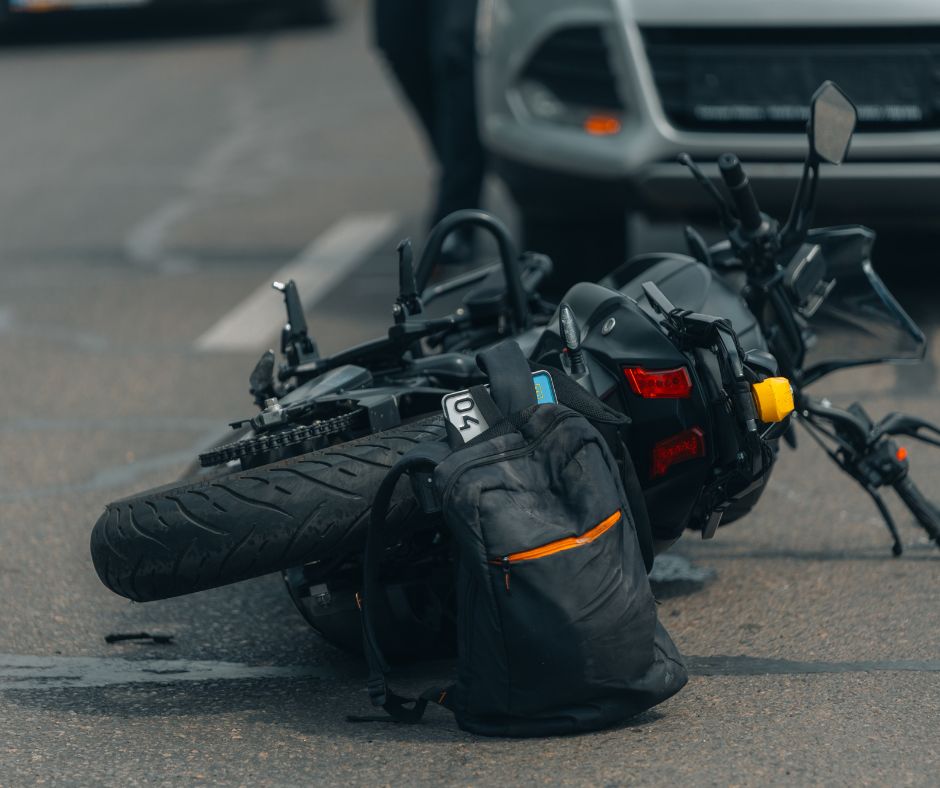
What percentage of motorcycle riders get in accidents? There’s no precise number, but riders are several times more likely to be injured in a crash than occupants of other vehicles. While not every rider will experience a collision, motorcycles are significantly more dangerous than cars in a crash.
Riders hurt by another driver can see how injury claims work on our page about legal help after a motorcycle crash in Sarasota.
Thousands of riders are involved in crashes nationwide each year. Florida consistently ranks among the top states for motorcycle crashes due to its climate, population density, and large number of visitors unfamiliar with local roads.
The state reports some of the highest totals, recording an average of nearly 9,000 crashes annually, according to the state’s traffic crash facts report.
Florida’s year-round riding season increases exposure. Congested roads, distracted drivers, and tourist traffic make motorcycle accidents more likely here than in many other places. Around Sarasota, riders meet that traffic every day on busy routes such as US-41, Clark Road, and Bee Ridge Road.
How a Rider’s Risk Compares With a Car Occupant’s
Many people ask, “What are the odds of getting in a motorcycle accident?” The truth is that odds vary depending on behavior, location, and awareness. However, research consistently shows that motorcycle crashes are far more likely to result in serious injury or death compared to typical car accidents.
The gap comes down to what happens to the body in a crash. People in a car sit inside a steel frame, held in place by seat belts, with airbags to soften the blow. A rider has a helmet and gear, and is often thrown from the bike onto the road or into another vehicle.
That is why a collision that leaves a driver bruised can leave a rider with broken bones, road rash, a head or spinal injury, or internal injuries. Measured by the miles they travel, riders are far more likely to be killed in a crash than people in cars.
Balance plays a part as well. A motorcycle can brake and swerve quickly, but it is less stable than a car, and a patch of sand or a sudden stop by the vehicle ahead can be enough to bring it down.
Defensive riding, wearing visible gear, and obeying traffic laws can greatly lower your risk. Still, even responsible riders can’t control how others behave on the road.
Common Causes of Motorcycle Crashes
Motorcyclists encounter hazards that car drivers rarely think about. Some of the main causes of accidents include:
- Visibility challenges. Motorcycles are smaller and easier to overlook, especially when other drivers make left turns or change lanes.
- Road hazards. Gravel, potholes, or oil slicks can cause a loss of traction or balance.
- Driver inattention. Many crashes happen when a distracted driver simply fails to notice a motorcycle nearby.
- Impairment and darkness. Night riding, poor lighting, and alcohol use can all make collisions more likely.
Where you ride matters too. Urban areas tend to have more crashes involving other vehicles, while rural roads often lead to higher speeds and more severe injuries.
Holidays bring their own risks. According to the Florida Department of Highway Safety and Motor Vehicles (DHSMV), traffic volume in Florida during the Christmas season is estimated to increase by approximately 30%, significantly elevating the chances of motorcycle accidents (DHSMV, 2021).
According to the National Highway Traffic Safety Administration (NHTSA), the percentage of alcohol-impaired drivers involved in fatal motorcycle accidents during the Christmas season rises significantly (NHTSA, 2019).
Even cautious and experienced riders can get caught in dangerous situations caused by someone else’s negligence.
Riders Versus Other Drivers: Who Is Usually at Fault?
Riders are often blamed for crashes they did not cause. In crashes between a motorcycle and another vehicle, though, the other driver is often the one who made the key mistake, usually by failing to see the rider or to yield the right of way.
Common driver errors include:
- Turning left across a rider’s path at an intersection.
- Changing lanes or merging into a motorcycle that sits in a blind spot.
- Pulling out from a side street, driveway or parking lot without seeing the bike.
- Following too closely and rear-ending a rider who slowed or stopped.
- Opening a car door into the path of an oncoming motorcycle.
Crashes that involve only the motorcycle tell a different story. When a rider runs wide on a curve or loses control without hitting anyone, speed, alcohol, inexperience or a road defect is often part of the cause.
Fault matters because it decides who pays and how much. A rider who shares some of the blame may receive less, and insurers know it. Our guide to the average motorcycle accident settlement explains how shared fault can shrink a claim’s value.
Proof settles these disputes. Photos, damage to the vehicles, witness statements and video from nearby cameras can show what really happened.
How Helmets Change the Odds
A helmet is the most important piece of safety gear a rider can wear. Head injuries are a leading cause of death in motorcycle crashes, and a well-fitting helmet that meets federal safety standards lowers the risk of both a serious brain injury and a fatal one.
A helmet works by spreading the force of an impact and absorbing energy before it reaches the skull. Full-face helmets also protect the jaw and face, which open-face and half helmets leave exposed.
Helmets do not prevent every injury. A rider can still suffer a concussion or a neck injury while wearing one. But crash studies keep finding that helmeted riders are less likely to die or to suffer a traumatic brain injury than riders without one.
Replace a helmet after any crash, even if it looks fine, since the protective foam inside may be crushed.
Helmet use can also come up in an injury claim. If a rider was not wearing one, an insurer may argue that a head injury would have been less severe with a helmet. Florida’s helmet rules have conditions and exceptions, which our guide to Florida motorcycle riding laws explains.
Safety Tips That Cut a Rider’s Crash Risk
You cannot control other drivers, but you can make yourself easier to see and give yourself more room to react. These habits and gear choices help:
- Wear bright or reflective gear and ride with your headlight on so drivers notice you sooner.
- Add protective gear beyond the helmet: an abrasion-resistant jacket, gloves, long pants and over-the-ankle boots.
- Take a rider training course, and a refresher if you have been off the bike for a while.
- Stay out of drivers’ blind spots and keep enough space to brake or swerve.
- Slow down and cover your brakes at intersections, where turning cars pose the biggest threat.
- Scan the road ahead for gravel, potholes and wet patches, and ease off in the rain.
- Never ride after drinking or when you are tired, and limit night riding when you can.
- Check your tires, brakes and lights before each ride.
Local knowledge helps too. Some intersections see far more crashes than others, so it is worth knowing Sarasota County’s most dangerous intersections before you ride through them.
During the busy winter season, when roads fill with visitors who do not know the area, leave extra space and expect sudden turns and stops.
What to Do After a Motorcycle Crash
If you are hurt, the steps you take at the scene and in the days after can protect both your health and your claim.
- If possible, move yourself and your motorcycle out of the roadway to prevent further injury or damage.
- Call for emergency help and ask for police to come, so there is an official report of the crash.
- Take photos and videos of the accident scene, vehicle damage, skid marks, road conditions, and visible injuries.
- Get the other driver’s name, contact and insurance details, plus contact information for any witnesses.
- Get medical care immediately, and be aware that some injuries take hours to appear.
- Avoid admitting fault or guessing about what happened when you speak with the other driver or an insurer.
- Keep your damaged helmet, gear and clothing, since they help show the force of the impact.
Even if your injuries seem minor, adrenaline can mask pain, and some injuries, such as concussions, internal bleeding, or soft tissue damage, may not be obvious at first.
For a fuller checklist, see our guide to the steps to take after a motorcycle crash.
When to Talk to a Lawyer
If another driver caused your crash, you may be able to recover your medical bills, lost income, the cost of your bike and gear, and compensation for pain and suffering.
Riders often face extra doubt from insurers, who may assume the rider was speeding or reckless. Talking with a lawyer before you give a recorded statement or accept an offer can help you keep the evidence, deal with the insurance companies and understand what your claim may be worth.
A lawyer can also look into every source of payment, from the other driver’s policy to your own coverage, and keep track of the deadline to file suit.
The questions to raise before deciding are laid out in our guide to choosing legal representation after a motorcycle collision.