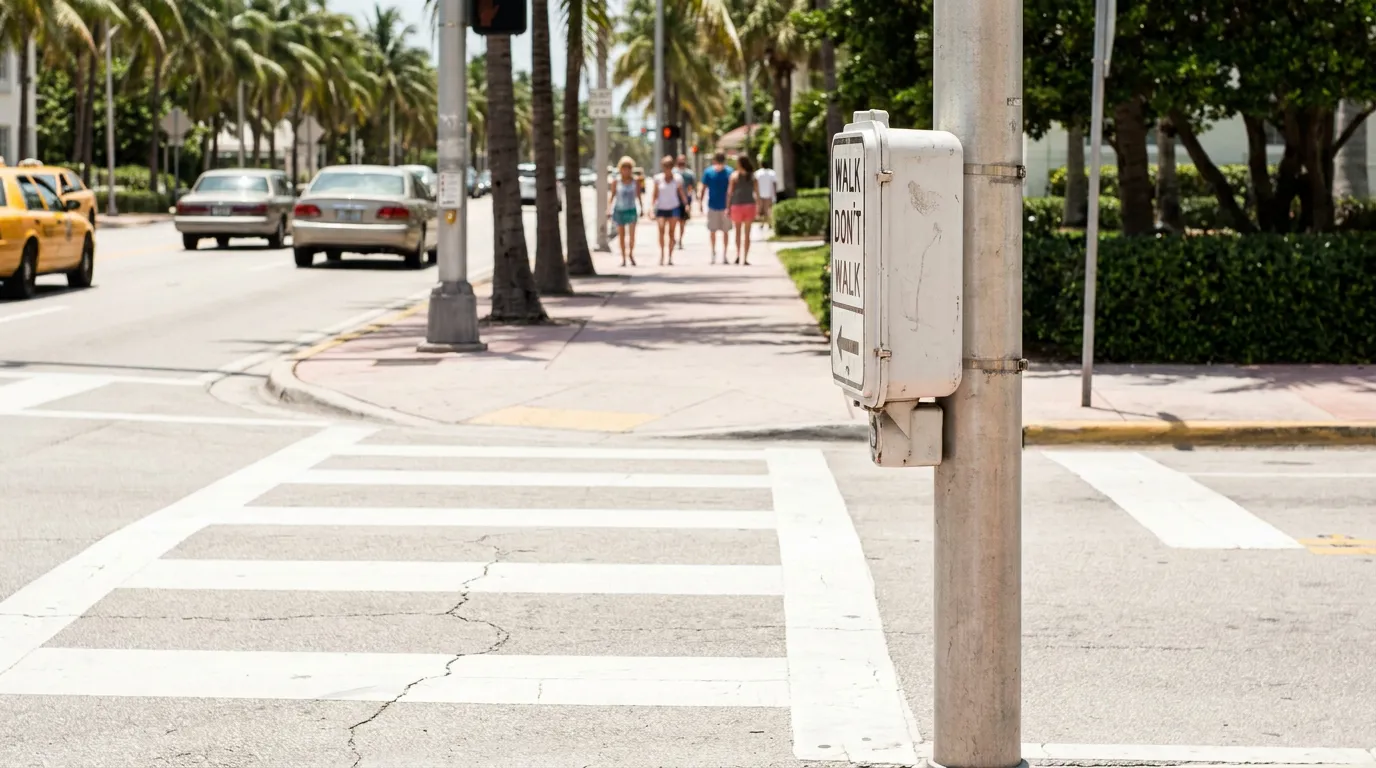
Protecting Your Footing After a Sarasota Pedestrian Crash
Key Takeaways: Florida pedestrian accident victims can weaken their claims by making avoidable errors. The seven most damaging mistakes are waiting too long to file (the deadline is now two years under HB 837), admitting fault or making careless statements, failing to preserve evidence, skipping or delaying medical treatment, talking to insurers alone, overlooking all responsible parties, and trying to handle a serious claim without legal guidance. Because Florida applies a modified comparative negligence standard, a pedestrian found more than 50 percent at fault may recover nothing, so every statement and delay can affect your outcome. Prompt medical care, thorough documentation, and quickly securing evidence like photos and surveillance footage all strengthen your case. Additional sources of recovery, such as uninsured or underinsured motorist coverage, may apply in hit-and-run or uninsured driver situations.
Being struck by a vehicle while on foot can upend your life in an instant, leaving you with mounting medical bills, lost wages, and painful uncertainty about what comes next. The choices you make in the moments and weeks that follow can either strengthen or quietly weaken your legal claim. Many injured pedestrians unintentionally damage their cases simply because no one warned them about the common pitfalls. At Greg Linehan Law, we believe that knowledge is one of your best tools for protecting your right to full recovery under Florida law.
If you or a loved one was injured on foot, reach out to Greg Linehan Law for a 100% free case review, call our office at 941-559-4529, or send us a message through our online contact page to discuss your next steps.
Pedestrian Hit by Car What to Do in Florida
Knowing the answer to the question of pedestrian hit by car what to do in Florida can shape the entire outcome of your claim. The first priorities are your health and safety: call 911, seek medical attention, and let officers document the scene. From there, your focus should shift to preserving your legal rights, because Florida law places specific responsibilities and time limits on injury victims.
Florida treats pedestrian claims as negligence actions, which means several statutory rules directly affect your case. These include how long you have to file, how fault is divided, and what damages you can pursue.
💡 Pro Tip: Write down everything you remember about the crash as soon as you are able, including weather, lighting, and vehicle direction. Memories fade quickly, and contemporaneous notes can become valuable evidence later.
The Missteps That Can Weaken a Pedestrian Injury Claim
The following errors are among the most damaging to a Florida pedestrian injury claim, yet nearly all are avoidable with the right guidance. Each relates to a specific legal principle that governs how your case will be evaluated.
1. Waiting Too Long to Take Legal Action
Missing your filing deadline is perhaps the single most fatal mistake a pedestrian can make. Following the 2023 tort reform under HB 837, the limitations period for general negligence claims was cut from four years to two years for claims accruing on or after March 24, 2023. This change is reflected in Florida’s civil filing deadline statute, Fla. Stat. § 95.11.
The two-year clock typically starts on the date of the collision. In negligence cases, a claim generally accrues when the injury and resulting damages occur, though limited accrual or tolling exceptions may apply in narrow circumstances. Because these rules are fact-sensitive and courts interpret them narrowly, you should confirm your specific deadline rather than assume you know it.
2. Admitting Fault or Making Careless Statements
What you say after a crash can be used to increase the share of fault assigned to you. Since the March 2023 amendment, Florida applies a modified comparative negligence standard under Fla. Stat. § 768.81(6), meaning an injured pedestrian found more than 50 percent at fault may recover nothing at all. Offhand apologies or guesses about what happened can become costly admissions.
This represents a significant shift from earlier law. Always verify the current rule before relying on any information, as outdated sources could seriously mislead you.
3. Failing to Preserve Evidence
Evidence disappears fast, and once it is gone, rebuilding your case becomes far harder. Under Fla. Stat. § 768.81, a defendant can shift blame to a nonparty if they affirmatively plead that nonparty’s fault and prove it at trial. The defense has a real incentive to point fingers elsewhere, and strong evidence helps you counter those arguments.
Photographs, surveillance footage, and witness contact information are often decisive. Sarasota’s busy corridors and intersections frequently have traffic cameras or nearby business security systems, but footage may be overwritten within days. Acting quickly to secure it can make a meaningful difference.
4. Skipping or Delaying Medical Treatment
Gaps in medical care give insurers an easy way to dispute the seriousness of your injuries. When you delay treatment, the defense may argue your injuries were minor or unrelated to the crash. Prompt, consistent care creates a documented link between the collision and your harm.
Thorough documentation also supports the full value of your damages. Fla. Stat. § 768.81(1)(b) defines recoverable economic damages broadly, including past and future lost income, medical and funeral expenses, and lost support and services.
5. Talking to the Insurance Company Alone
Insurance adjusters are trained to minimize payouts, and early conversations often work against you. Recorded statements and quick settlement offers can lock you into positions before you understand the true extent of your injuries. What feels like a helpful phone call is often an effort to reduce your pedestrian crash compensation.
Comparative fault gives insurers a financial motive to shift blame. Under Fla. Stat. § 768.81(3), a court will enter judgment against each liable party based on that party’s percentage of fault rather than joint and several liability. The more fault the insurer can assign to you, the less it may have to pay.
6. Overlooking All Potentially Responsible Parties
Focusing only on the driver can cause you to miss important sources of recovery. Defendants can plead and prove that a codefendant or nonparty caused some of your injuries, which may reduce one party’s liability while leaving others responsible. Identifying every party early helps protect your claim.
This is especially important in hit-and-run and uninsured driver situations. Uninsured and underinsured motorist (UM/UIM) coverage may provide compensation when the at-fault driver cannot, if you have purchased that coverage.
💡 Pro Tip: If the crash occurred at a roundabout, the rules of right-of-way can be nuanced. Our discussion of pedestrian accidents in roundabouts explains how these unique intersections can affect fault.
7. Trying to Handle a Serious Claim Without Guidance
Catastrophic injuries, such as traumatic brain injuries, often involve long-term care needs that are easy to undervalue. Because Florida ties liability to causation, disputes over each party’s role in causing the injury sit at the center of most pedestrian cases. The Florida Bar Journal explains this principle, noting that under the state’s comparative fault framework, a negligent party’s degree of liability is generally limited to that party’s own degree of fault.
Handling these disputes without seasoned guidance can leave value on the table. With more than 26 years of experience, Greg Linehan personally handles each case rather than passing clients to a rotating team. If you were injured on foot, our Sarasota pedestrian accident resources can help you understand your options.
💡 Pro Tip: Keep a daily journal of your pain levels, treatment, and how your injuries affect work and family life. This record can help document non-economic harm that receipts alone cannot capture.
How Florida’s Comparative Fault Rules Affect Your Recovery
Florida’s comparative fault system directly determines how much an injured pedestrian can ultimately recover. Fla. Stat. § 768.81 applies to negligence actions broadly and reduces your compensation in proportion to your own share of fault. Understanding this framework helps explain why many of the mistakes above center on fault and evidence.
Here is a simplified look at how fault can affect a claim:
| Pedestrian’s Share of Fault | General Effect on Recovery |
|---|---|
| 0% to 50% | Recovery may be reduced by your fault percentage |
| More than 50% | Recovery is generally barred under § 768.81(6) |
These outcomes always depend on the specific facts of your case. Because fault is contested and evidence-driven, results vary widely. Protecting yourself starts with avoiding statements and delays that hand the defense an advantage.
Frequently Asked Questions
1. How long do I have to file a pedestrian injury lawsuit in Florida?
Generally, you have two years from the date the claim accrues under Fla. Stat. § 95.11. In most pedestrian cases the claim accrues on the date of the crash, though limited exceptions may apply. Confirm your specific deadline promptly.
2. What happens if I was partly at fault for the crash?
Under Fla. Stat. § 768.81, your recovery is reduced in proportion to your share of fault. If you are found more than 50 percent at fault, you generally cannot recover damages. This is why avoiding careless admissions is so important.
3. Can I still recover if the driver fled or had no insurance?
Possibly, through uninsured or underinsured motorist coverage. These claims depend on whether you carry that coverage. A review of your available coverage helps clarify your options.
4. What should I do right after being hit by a car in Florida?
Seek medical care, call the police, and preserve evidence such as photos and witness information. Avoid giving recorded statements to insurers before you understand your rights.
5. How is compensation calculated in a pedestrian claim?
Economic damages under § 768.81(1)(b) include lost income, medical expenses, and lost support and services. Non-economic harm, such as pain and suffering, may also be available. The value depends heavily on the facts and evidence.
Moving Forward With Confidence After a Pedestrian Crash
Avoiding these seven mistakes can meaningfully strengthen your ability to protect a pedestrian claim in Florida. From meeting the two-year deadline to preserving evidence and guarding against inflated fault, each step reflects a specific principle of Florida law. While no result can ever be guaranteed, informed action gives you the strongest possible foundation. Greg Linehan Law is proud of its deep Sarasota roots and its commitment to holding negligent parties and insurers accountable.
If you were struck on foot, do not wait to protect your rights. Get your 100% free case review with Greg Linehan Law today, call us directly at 941-559-4529, or reach out through our secure contact form to discuss your situation with a trusted local advocate.
This blog is for informational purposes only and does not constitute legal advice. Contact Greg Linehan Law to discuss your specific case.