
What a Sarasota E-Bike Crash Lawyer Checks First After You Are Hurt
You were riding your e-bike along Osprey Avenue when a driver turned right across your path without signaling. One moment you were heading home. The next, you were on the pavement with a broken wrist, a damaged bike and a driver insisting you "came out of nowhere." After a crash like this, a seasoned Sarasota e-bike crash lawyer looks at more than the police report. The questions include your e-bike’s class, how the driver passed or turned, whether the bike had a defect, and which insurance policies may pay for your losses. At Greg Linehan Law, attorney Greg Linehan has represented injury victims in Sarasota for 29 years. He was also recognized by 2025 Super Lawyers. This guide covers what we look for in an e-bike case.
If you or someone you love was hurt in an e-bike collision, Greg Linehan Law is here to help. Call 941-559-4529 or contact us now for your 100% free case review.
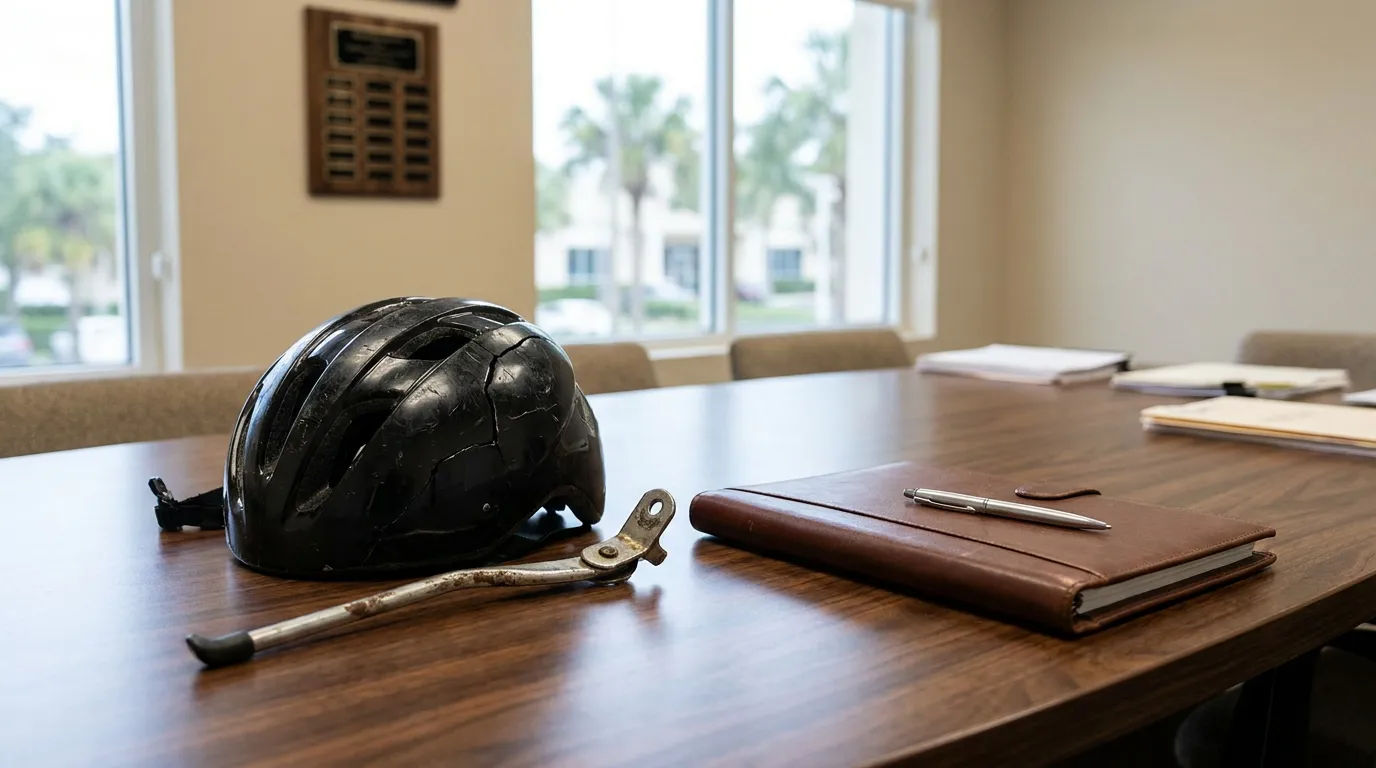
The Legal Building Blocks Behind Every E-Bike Claim
Every e-bike injury claim in Florida starts with how the law classifies the bike and its rider. Florida law generally treats e-bikes like traditional bicycles. That status shapes who owed you a duty, what rules applied and how insurers may try to shift blame.
Why Your E-Bike’s Class Matters
Florida defines an electric bicycle as a bicycle or tricycle with fully working pedals, a saddle or seat, and an electric motor of less than 750 watts. Under Fla. Stat. § 316.003 (2025), each e-bike falls into one of three classes:
- Class 1: Pedal-assist only. The motor stops helping at 20 mph.
- Class 2: Can run on the motor alone. The motor stops helping at 20 mph.
- Class 3: Pedal-assist only. The motor stops helping at 28 mph.
We check the class early because insurers often use speed to argue that the rider caused the crash. These limits apply only to motor assistance. A rider can still go faster by pedaling or riding downhill, so the class alone does not prove your speed. Still, the class label, motor wattage and scene evidence together can help rebut an adjuster’s claim that you were "flying."
Your Rights as an E-Bike Rider on Sarasota Roads
Under Fla. Stat. § 316.20655(1) (2025), e-bike riders have the same rights and duties as regular bicyclists, including those in § 316.2065. Under § 316.20655(7), you may generally ride wherever bicycles are allowed, including streets, shoulders, bike lanes and multiuse paths. Local governments can still regulate e-bike use, so we review Sarasota’s local ordinances in each investigation.
💡 Pro Tip: Photograph the class label on your e-bike as soon as you can after a crash. It can become key evidence if the insurer disputes your speed.
Driver Mistakes We See Again and Again on Busy Sarasota Roads
Many of the e-bike cases we review come down to a driver who ignored basic safety rules. Florida’s Chapter 316 traffic laws set clear duties for drivers sharing the road with bicyclists and e-bike riders. A broken rule can serve as evidence of negligence, but it does not automatically prove liability.
Unsafe Passing and the 3-Foot Rule
Under Fla. Stat. § 316.083 (2025), a driver passing a bicycle or e-bike must leave at least 3 feet between the vehicle and the rider. The driver must pass only when it is safe. On roads like US-41, evidence of an unsafe pass is central to many claims, including video, witness statements and damage patterns.
Right-Hook and Left-Turn Crashes
Turning drivers cause some of the most serious e-bike injuries we see. Under Fla. Stat. § 316.155 (2025), a driver may turn only when it can be done with reasonable safety. The driver must also signal continuously for at least the last 100 feet before turning if another vehicle could be affected. Because e-bikes are vehicles under Florida law, a driver who cuts across a rider without signaling may have broken this rule. Our guide to documenting crash evidence explains how to protect proof of what happened.
💡 Pro Tip: Ask nearby businesses about security camera footage within the first few days. Many systems record over old video quickly.
E-Bike Battery Fire and Defect Claims: When the Bike Itself Is to Blame
Not every e-bike injury involves a car. Sometimes the battery catches fire, the brakes fail or the motor keeps running when it should cut off. These cases may lead to a product liability claim against the manufacturer, distributor or seller.
Florida sets specific equipment rules that can support a defect claim. Under Fla. Stat. § 316.20655 (2025), e-bikes must meet the federal Consumer Product Safety Commission requirements in 16 C.F.R. part 1512. The motor must also stop providing assistance when the rider stops pedaling or applies the brakes, with some exceptions for Class 2 throttle use. A bike that fails these requirements may help show a defect, but a claim still requires proof that the defect caused your injuries.
After a battery fire or mechanical failure, the label and any signs of aftermarket changes are critical evidence. Since January 1, 2021, § 316.20655 has required manufacturers and distributors to permanently label each e-bike with its class, top assisted speed and motor wattage. Manufacturers often dispute these claims, so we work to preserve the bike, battery and charger as they are.
💡 Pro Tip: Do not throw away, repair or return a damaged e-bike or battery before speaking with an attorney. The physical evidence may be essential.
Insurance, Fault and Deadlines That Can Affect Your Recovery
Insurance often decides how much an injured e-bike rider can recover. Under Fla. Stat. § 316.20655(2) (2025), e-bikes and their riders are not subject to Florida’s financial responsibility, licensing or registration requirements for motor vehicles. Because the bike usually carries no insurance, the at-fault driver’s coverage and other sources often matter most. We look at every possible policy, including any uninsured or underinsured motorist coverage you or a household member may carry. Your own personal injury protection (PIP) coverage may also apply.
Florida’s modified comparative negligence rule can reduce or bar your recovery. Under Fla. Stat. § 768.81(6), part of Florida’s Chapter 768 negligence laws, a plaintiff found more than 50% at fault generally cannot recover damages. If you are 50% or less at fault, your award is generally reduced by your share of fault. Insurers know this rule well, which is why they may claim you were speeding, invisible or riding where you should not have been.
Deadlines also apply, and they vary by claim type. Under Fla. Stat. § 95.11(5)(a) (renumbered in 2024 from the former § 95.11(4)(a)), most negligence claims accruing on or after March 24, 2023, generally must be filed within two years. Under Fla. Stat. § 95.11(5)(e) (formerly § 95.11(4)(d)), wrongful death claims are also generally subject to a two-year period from the date of death. Product liability claims are generally subject to a four-year period under § 95.11(3), and Florida’s statute of repose in § 95.031 may also apply. Claims against government entities require written pre-suit notice under § 768.28(6), generally within three years. Waiting can put your claim at risk.
💡 Pro Tip: Avoid giving a recorded statement to the other driver’s insurer before getting legal advice. Casual comments about your speed or route may be used to assign you fault.
What a 2025 Super Lawyers Recognition Means for Your Case
Super Lawyers is a rating service that recognizes attorneys through a process that includes peer nominations and independent research. Greg Linehan’s 2025 Super Lawyers recognition reflects how other lawyers and the selection process view his professional record. No award guarantees a result, but it can help you judge an attorney’s standing.
This recognition sits alongside other honors and hands-on experience. Greg Linehan has also been recognized by Lawyers of Distinction 2024, 2024 Elite Top and the 2025 Florida Justice Association. More important to most clients, he has spent nearly three decades representing injured people in Sarasota. He knows the local roads, courts and insurance tactics that can shape an e-bike claim. For a closer look at how we handle these cases, visit our Sarasota electric bike accident lawyer page.
Why You Should Choose Greg Linehan Law
Choosing a lawyer after an e-bike crash comes down to trust, experience and attention. At Greg Linehan Law, you work directly with Greg Linehan and his longtime team. Our process follows three steps:
- A free case review with an honest assessment of your options
- We handle the legal process, from investigation through negotiation or trial if needed
- We work toward resolving your case so you can move forward
We handle the paperwork and the insurance companies so you can focus on healing. We represent clients on a contingency fee basis, so there are no upfront attorney fees. Greg Linehan has served as President of Suncoast Charities for Children since 2020 and sits on the board of the Suncoast Foundation for Handicapped Children. He is also a former YMCA board member.
Frequently Asked Questions
Common Questions About Electric Bike Crashes in Sarasota, FL
1. Can I still recover compensation if I was partly at fault?
In many cases, yes. Under Fla. Stat. § 768.81(6), you may recover damages if you are 50% or less at fault, although your award is generally reduced by your share of fault. If you are found more than 50% at fault, you are generally barred from recovery.
2. Does my e-bike need insurance in Florida?
No. Florida does not require e-bike riders to carry the financial responsibility coverage that applies to motor vehicles. Your recovery may therefore depend on the at-fault driver’s policy and any other coverage available to you.
3. Who is responsible if my e-bike battery caught fire?
Responsibility may fall on the manufacturer, distributor, seller or someone who modified the bike or battery. The class label and any signs of aftermarket changes can help identify the responsible party.
4. How long do I have to file an e-bike injury claim?
Most negligence claims accruing on or after March 24, 2023, generally must be filed within two years under Fla. Stat. § 95.11(5)(a) (renumbered in 2024 from the former § 95.11(4)(a)). Product liability claims and claims against government entities follow different deadlines and notice requirements. Speaking with an attorney early can help protect your rights.
5. Does it cost anything to talk to Greg Linehan Law?
No, your case review is completely free. We handle e-bike injury cases on a contingency fee basis, so you pay no attorney fees unless we recover compensation for you.
Getting the Right Help After a Sarasota E-Bike Crash
An e-bike crash can leave you dealing with injuries, missed work and an insurer looking for reasons to pay less. The right attorney looks closely at your bike’s class, the driver’s conduct, possible product defects and every available insurance source. Greg Linehan brings 29 years of Sarasota experience and 2025 Super Lawyers recognition to that work, with the personal attention of a small firm.
Call Greg Linehan Law for a free consultation. Reach us at 941-559-4529 or schedule your free case review today.
This blog is for informational purposes only and does not constitute legal advice. Contact Greg Linehan Law to discuss your specific case. Disclaimer: This content is for informational purposes only and is not legal advice. Every case is unique, and results may vary. Consult an attorney about your specific circumstances.