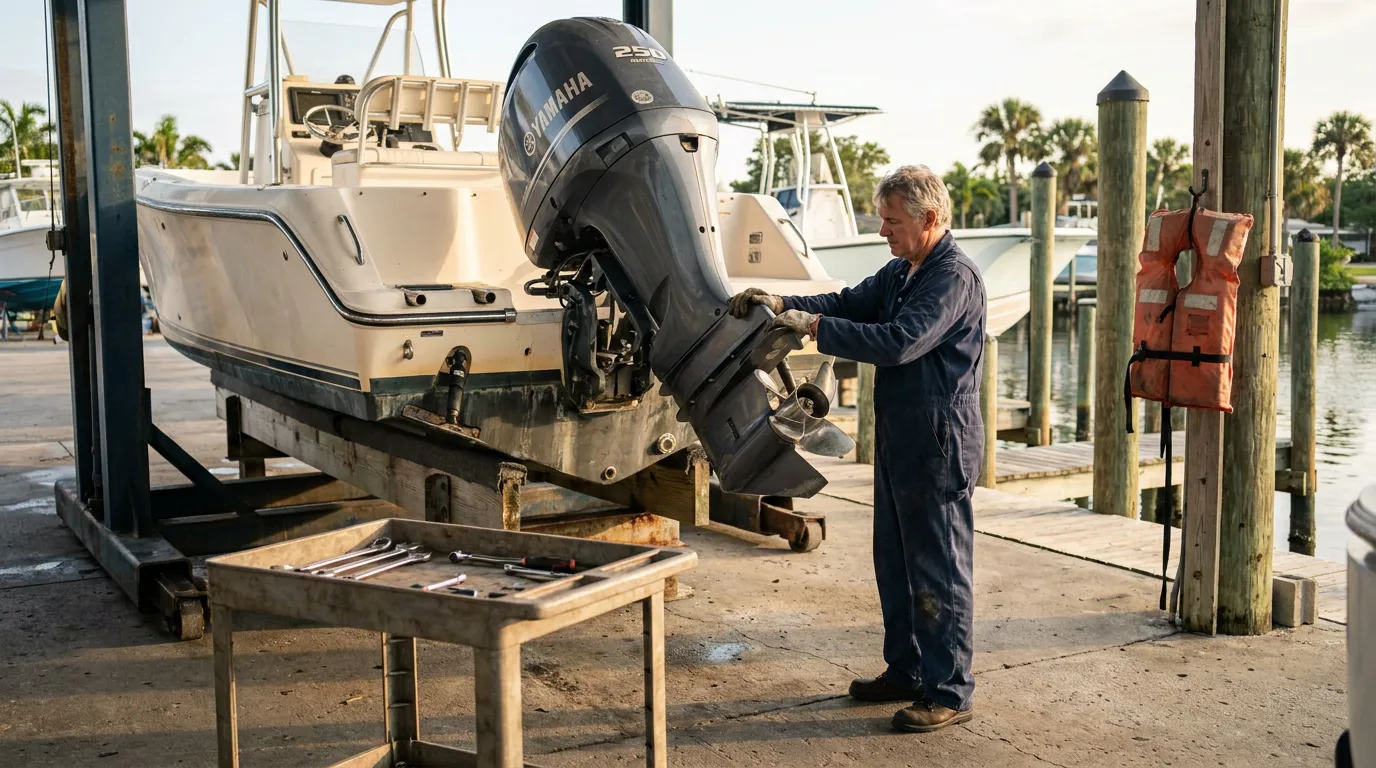
Nearly Three Decades of Standing Up for Injured Sarasota Workers
You wake up after a fall from scaffolding, a machine pinch injury, or a shift that finally pushed your wrists too far, and the questions pile up fast. Will insurance pay for surgery? What happens to your paycheck? Who decides when you’re "healed"? Choosing the right Sarasota workers’ compensation attorney shapes everything that follows, and Greg Linehan Law has spent 29 years helping injured Sarasota workers answer those questions with confidence rather than guesswork.
If you’re weighing your options, the team at Greg Linehan Law is ready to listen. Call 941-559-4529 or schedule your free case review to talk through what happened and what comes next.
What 29 Years of Workers’ Comp Experience Actually Buys You
Experience here is pattern recognition, not decoration. Attorney Greg Linehan has represented injury victims in Sarasota for 29 years, building cases and dealing with insurance carriers across nearly three decades of changing statutes, medical standards, and claims tactics. A claim that feels chaotic to you generally looks familiar to us.
Florida’s workers’ compensation system is a self-contained world with its own rules, set out in Florida Statutes Chapter 440, governing employer obligations, benefit types, and dispute resolution. Fla. Stat. § 440.11 generally makes workers’ compensation the exclusive remedy against an employer that has secured coverage, meaning an injured employee ordinarily cannot sue in civil court. That immunity isn’t unlimited: § 440.11(1)(b) recognizes narrow exceptions, including intentional torts, and an employer that fails to secure required coverage may lose immunity under § 440.11(1)(a), while § 440.06 separately bars such an employer from asserting the defenses of fellow servant negligence, assumption of risk, and comparative negligence. The version of Chapter 440 in effect when you were hurt controls your claim.
Benefits are categorized, and the category matters enormously. Fla. Stat. §§ 440.13-440.16 address medical care, temporary total and partial disability, impairment income, permanent total disability, and death benefits. Knowing which category fits your situation, and when it may shift, is often where claims are won or quietly lost.
💡 Pro Tip: Keep a dated notebook of every symptom, missed shift, and adjuster call. Contemporaneous notes are often more persuasive than memory reconstructed months later.
Deadlines That Can End a Claim Before It Starts
Florida imposes firm filing requirements, and courts interpret exceptions narrowly. Under Fla. Stat. § 440.19(1), petitions for benefits are barred unless the employee notified the employer under § 440.185(1), generally within 30 days of injury or its manifestation, with limited exceptions, and filed within two years after the employee knew or should have known the injury arose from work. Reporting duties appear in Florida’s injury notice statute.
A limited tolling mechanism exists, but should never be treated as automatic. Fla. Stat. § 440.19(2) provides that payment of indemnity benefits or remedial treatment tolls the limitations period for one year from that payment. Tolling does not apply to compensability, MMI date, or permanent impairment, so relying on continued treatment as a safety net can be costly. Limited equitable defenses exist, such as when a carrier’s conduct misleads a worker into missing a deadline, but these are fact-intensive and hard to win.
Administrative claim deadlines differ from civil statutes of limitations. Assuming they’re interchangeable can cost you rights in one forum while preserving them in another. We walk clients through both tracks early, because decisions made in month one often determine what’s available in year two.
How Maximum Medical Improvement Florida Workers Comp Rules Shape Your Case
MMI is the hinge on which most Florida claims turn. Fla. Stat. § 440.02(12) defines the date of maximum medical improvement as the date after which further recovery from, or lasting improvement to, an injury or disease can no longer reasonably be anticipated, based upon reasonable medical probability. Reaching MMI doesn’t mean you’re pain-free or fully restored.
Once MMI is certified, your claim’s mechanics change quickly. Under Fla. Stat. § 440.15(3)(d), the certifying doctor must assign an impairment rating once MMI is certified, or six weeks before temporary benefits expire, whichever is earlier; the carrier then establishes an overall MMI date and rating. If MMI isn’t certified within 98 weeks after temporary benefits begin, the carrier must notify the treating doctor of these requirements.
Here is what an MMI determination typically influences:
- Whether temporary disability payments continue or convert to permanent impairment benefits
- The impairment rating, which drives the value of ongoing compensation
- Whether settlement becomes available, since Fla. Stat. § 440.20(11)(b) allows an unrepresented claimant, by joint petition, to accept a lump-sum payment releasing future medical liability after reaching MMI
- The strength of your position if the carrier disputes compensability or the rating
A premature MMI date can quietly shrink a claim. Disagreements often center on whether the assigned date reflects the worker’s actual medical trajectory. Our 29 years handling these disputes informs how we evaluate whether a rating deserves challenge, though outcomes depend on the specific record.
💡 Pro Tip: Before agreeing to any lump-sum settlement, ask what future medical care your condition may require. A release under § 440.20(11)(b) can extinguish rights to treatment you haven’t yet needed.
When a Workplace Injury May Involve More Than Workers’ Comp
Exclusive remedy is the default, not an absolute rule. The Florida Bar Journal’s analysis of the unrelated works exception examines when a co-employee’s immunity under § 440.11 may not apply because the employees were assigned to unrelated work. Where it applies, an injured worker may have an additional civil claim. Separately, a claim against a negligent third party can often proceed alongside a workers’ comp claim, though the carrier may assert a lien under § 440.39 against any recovery.
These situations are fact-dependent and narrowly construed. Identifying the possibility early matters, because a Sarasota workers’ compensation lawyer who spots a potential third-party or unrelated-works issue at intake can preserve evidence that disappears within weeks.
💡 Pro Tip: Photograph the equipment, work area, and subcontractor signage before the scene is cleaned up. Documentation gathered on day one rarely gets a second chance.
What Peer Recognition and Community Awards Actually Signal
Awards don’t decide cases, but credible ones show how a lawyer is regarded by people who know the work. Greg Linehan was named to the 2026 Elite Top Attorneys list by SRQ Magazine, an honor nominated and voted on by local area attorneys. Peer-voted recognition matters because opposing counsel and colleagues see how a lawyer prepares, negotiates, and tries cases.
Independent evaluation adds another layer. Greg has been selected to Super Lawyers in 2024, 2025, and 2026, through a multi-phase evaluation process that recognizes the top 5% of attorneys in each state across more than 70 practice areas. He was also recognized as a 2026 Lawyers of Distinction member, a designation involving a scored review across twelve enumerated factors and a final ethics review covering the prior ten years.
Recognition Rooted in Sarasota
Community standing matters when your lawyer practices where you live. Greg Linehan Law earned the Bronze medal for Best Legal Firm in the Sarasota area in the 2025 Best of SRQ Local community vote, decided by local residents rather than an industry panel. Greg also received SRQ Magazine’s 2024 Good Hero Award for his service as board member and board president of Suncoast Charities for Children, where his work helped direct record funding to seven local nonprofits benefiting children, teens, and adults with special needs.
These recognitions reflect past performance, not a prediction of results in any particular case, and are not evaluations by The Florida Bar or any governmental body. What they indicate is consistency: sustained peer respect, client regard, and investment in the Sarasota community over many years, worth weighing when deciding whom to trust with a claim affecting your family’s stability.
Why You Should Choose Greg Linehan Law
You work directly with Greg, not a rotating cast of case managers. Greg and his team have worked together for more than 15 years, so clients deal with the attorney handling their file rather than being passed between staff. In workers’ comp matters, where medical timelines and carrier communications must stay aligned, that continuity has real value.
Our process is straightforward and built around your recovery. It begins with a free case review, continues through investigation, negotiation, or a hearing before a judge of compensation claims, and concludes with resolution and medical bills addressed. We handle the paperwork and insurance correspondence so you can focus on getting better.
We handle these matters with no upfront costs to you. Claimant attorney’s fees are governed and must be approved under Fla. Stat. § 440.34, so the fee arrangement differs from a standard contingency fee in a civil case; we explain exactly how it works before you hire us. Understanding Florida workers’ compensation law shouldn’t require a law degree. Greg maintains a Sarasota office, is licensed to practice in Florida, and has built a practice on honest answers and steady advocacy.
💡 Pro Tip: If your benefits are suddenly reduced or terminated, request the carrier’s written explanation immediately. It often reveals the exact issue a petition for benefits will need to address.
Frequently Asked Questions
Common Questions About Workers’ Compensation in Sarasota, FL
1. How long do I have to file a workers’ comp claim in Florida?
Under Fla. Stat. § 440.19(1), petitions for benefits are generally barred unless you notified your employer under § 440.185(1), generally within 30 days, and filed within two years after you knew or should have known the injury arose from work. Occupational diseases and repetitive-trauma conditions complicate when that clock starts, so earlier action is safer.
2. Can my employer be sued directly for a workplace injury?
Usually no. Fla. Stat. § 440.11 makes workers’ compensation the exclusive remedy against a covered employer in most circumstances. Narrow exceptions exist, including the intentional-tort exception in § 440.11(1)(b), the unrelated-works exception among co-employees, and situations where the employer failed to secure required coverage, depending heavily on the facts.
3. What happens if I disagree with my assigned MMI date or impairment rating?
Disputes over the MMI date and rating are common, and the one-year tolling provision in § 440.19(2) does not apply to those issues, making timing critical. A review of medical records and the certifying physician’s report is typically the starting point, and the statute offers tools like a one-time change of physician under § 440.13(2)(f) or an independent medical exam under § 440.13(5).
4. Should I accept a lump-sum settlement offer?
Fla. Stat. § 440.20(11)(b) permits an unrepresented worker, by joint petition, to accept a lump-sum payment releasing future medical liability any time after MMI; where represented, § 440.20(11)(c) requires the judge to approve only the attorney’s fee, not the settlement itself. Whether accepting is wise depends on your prognosis, future care needs, Medicare or lien obligations, and earning capacity, analyze this before signing anything.
5. What if my injury developed gradually rather than from one incident?
Repetitive stress conditions and occupational diseases like carpal tunnel or chemical exposure can be covered under Chapter 440, but carry heightened proof requirements: §§ 440.02(1) and 440.151 require the condition arise from occupational exposure and, for repetitive-trauma claims, that work exposure be the major contributing cause established by objective medical findings. Documentation of tasks, exposure history, and consistent treatment strengthens these claims considerably.
Making a Confident Decision About Your Claim
Florida’s workers’ compensation system runs on definitions, deadlines, and medical opinions that carry legal weight, from the MMI standard in § 440.02(12) to the two-year filing rule in § 440.19(1). Understanding those rules is the first step; having someone who has navigated them for 29 years is the second. Every claim turns on its own facts, and no lawyer can promise a result, but preparation, timing, and persistent advocacy consistently give injured workers their strongest footing.
If a workplace injury has disrupted your health, income, or family’s plans, Greg Linehan Law would be glad to help you understand your options. Call 941-559-4529 or get your 100% free case review today, with no upfront costs and no obligation.
Disclaimer: This content is for informational purposes only and is not legal advice. Statutory citations reflect current law, which may change, and the version of Chapter 440 in effect on your date of accident generally governs your claim. Every case is unique, and results may vary. Consult an attorney about your specific circumstances.