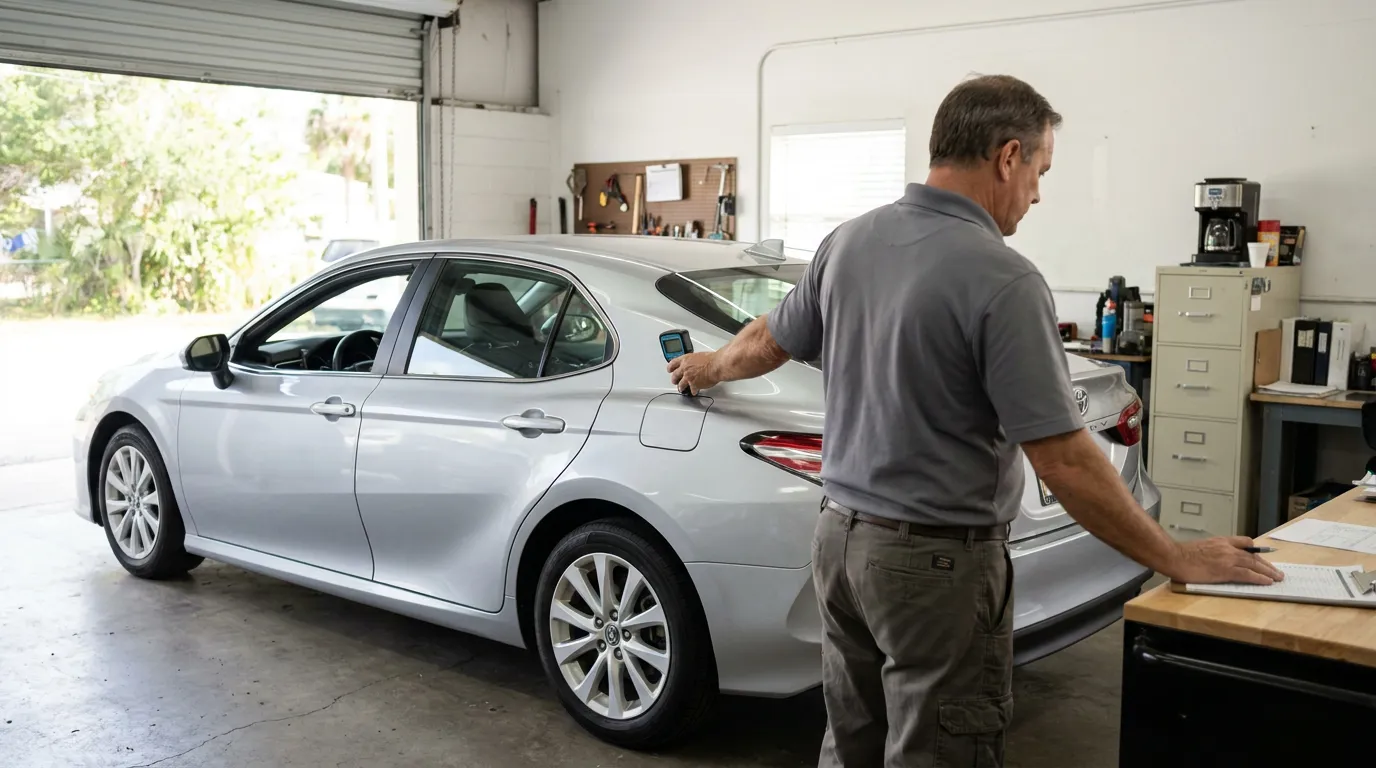
Your Car Was Repaired, But It Is Not Worth What It Used to Be
Key Takeaways: Diminished value is the resale value your vehicle may lose because of a reported collision, even after quality repairs. In Florida, the not-at-fault owner at the time of the crash is generally positioned to file, and the claim usually goes against the at-fault driver’s insurer rather than your own. Viability typically depends on another driver being at fault, the vehicle being repaired rather than declared unrebuildable, the car retaining meaningful market value, and your ability to document the loss. Insurers often start with the 17c formula, capping compensation at 10 percent of pre-crash value, though that formula was never adopted as Florida law and independent appraisals frequently support stronger numbers. Evidence such as the crash report, repair invoices, a vehicle history report, and a licensed appraisal can support serious negotiation, and a negligence action from a crash on or after March 24, 2023 generally must be filed within two years under Fla. Stat. § 95.11(5)(a). Because these claims are fact-sensitive, a Sarasota attorney can help you evaluate eligibility and pursue the value you paid for.
You took your vehicle to a trusted body shop after a crash on Fruitville Road, paid your deductible, and got the car back looking showroom fresh. Then you tried to trade it in, and the dealer knocked thousands off because a vehicle history report showed the collision. That gap between pre-crash and post-repair worth is called diminished value, and Florida law may allow you to pursue it from the at-fault driver’s insurer. Understanding dv claim eligibility early can make the difference between recovering that loss and quietly absorbing it.
At Greg Linehan Law, Greg Linehan has spent more than 26 years helping Sarasota-area drivers hold negligent parties and their insurers accountable. If a collision left you with a repaired vehicle that lost market value, call 941-559-4529 or contact our team today for a free, no-obligation case review.
What Diminished Value Actually Means After a Florida Crash
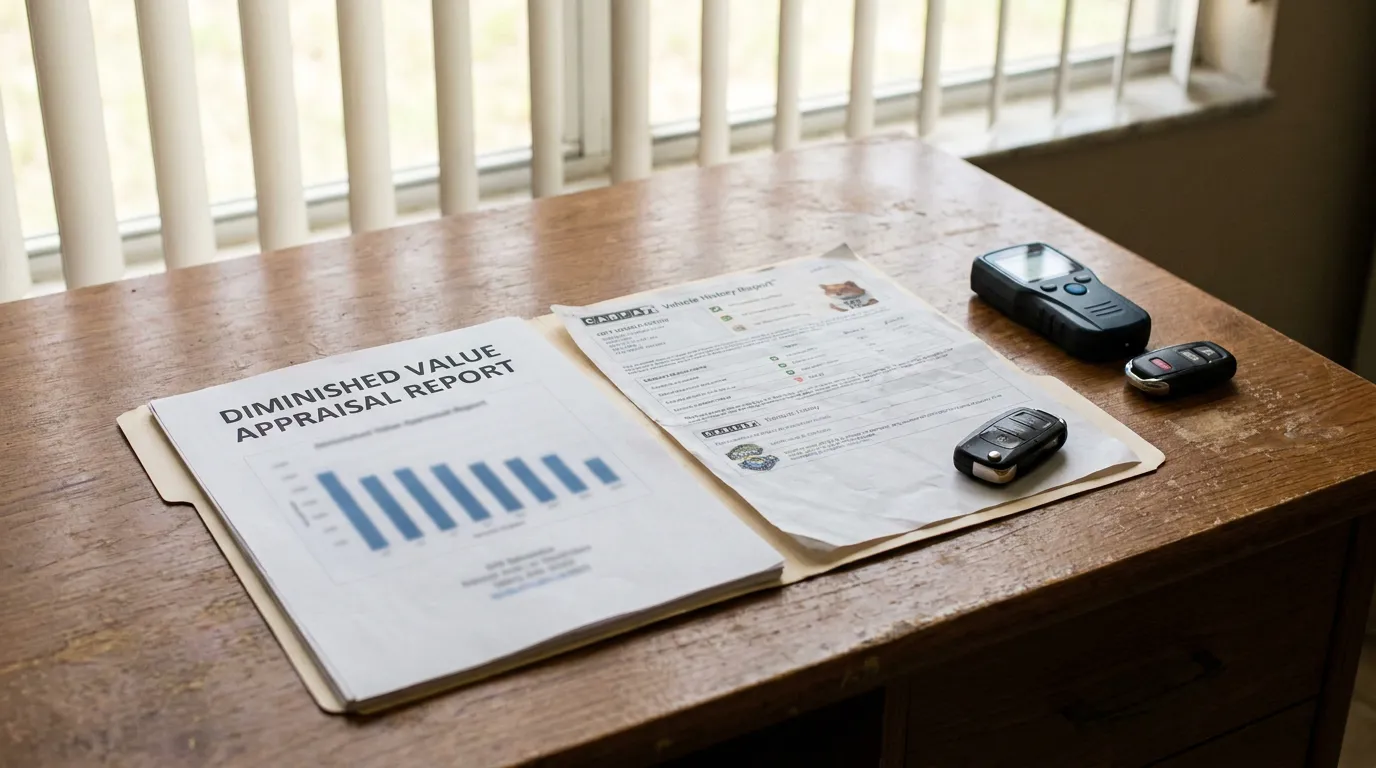
Diminished value is the loss in a vehicle’s resale value that may result from a reported collision, even when repairs are done properly. It’s the difference between a car’s pre-crash value and its post-repair value, reflecting reduced buyer trust in vehicles with accident histories. The metal is fixed, but the market memory may not be.
Buyers and dealers price risk, and a crash history can signal risk. Even factory-quality repairs can leave a notation in commercial history databases, meaning post-repair value loss can represent real economic harm. Florida law generally recognizes that negligent damage to personal property can be compensable, though the recoverable measure depends on the evidence and type of loss proven.
Three Recognized Types of Value Loss
- Inherent diminished value: loss attributable solely to the vehicle’s new crash history, the most commonly pursued category.
- Repair-related diminished value: additional loss from incomplete, substandard, or cosmetically imperfect repairs.
- Immediate diminished value: the difference in resale value measured right after the crash versus before any repairs.
Who Can File a Diminished Value Claim in Florida
Generally, the not-at-fault owner at the time of the collision is positioned to pursue a diminished value claim in Florida. These claims are typically filed against the at-fault driver’s insurer rather than your own, since third-party recovery is the usual path here. Leased, financed, or company-owned vehicles raise additional ownership questions that may affect who can recover.
A few threshold conditions commonly determine viability, though outcomes remain fact-dependent:
- Another driver was at fault. Florida applies modified comparative negligence under Fla. Stat. § 768.81 for causes of action accruing on or after March 24, 2023, so your own fault share may reduce recovery and generally bars it entirely if you were more than 50 percent at fault.
- The vehicle was repaired, not totaled. A salvage-titled or destroyed vehicle generally has no repaired asset to devalue, so the claim becomes a total-loss valuation dispute instead.
- The vehicle retains meaningful market value. Newer, lower-mileage, higher-demand vehicles often show measurable market value loss after accident; a high-mileage older car may show little.
- You can prove the loss. Documentation, not assertion, drives these claims.
Why Total-Loss Vehicles Usually Fall Outside These Claims
Florida’s salvage rules distinguish repaired vehicles from destroyed ones. For a late model vehicle (current model year or within seven years prior) with a retail cost of at least $7,500 before damage, Fla. Stat. § 319.30(3)(c) requires the department to declare it unrebuildable and issue a certificate of destruction if repair costs equal 90 percent or more of that retail cost. Older or lower-value vehicles receive a certificate of destruction only when their sole value is as parts or scrap, and the statute allows the vehicle to avoid total-loss status if the insurer and owner agree to repair it. See the Florida motor vehicle title statutes for full detail.
If your vehicle crosses that threshold, the claim may become a total-loss valuation dispute instead, arguing actual cash value at the time of the crash rather than repaired car value Florida buyers would pay afterward. Both may be legitimate, but they follow different proof paths.
How Insurers Calculate Florida Car Value Loss
Most carriers start with a formula rather than an open valuation. Many apply the 17c formula, capping diminished value compensation at 10 percent of pre-crash value, then applying multipliers for damage severity and mileage.
That formula was never adopted as Florida law, and it may understate real-world loss. It originated in out-of-state litigation and became industry-convenient, which is one reason independent appraisal evidence carries weight. A diminished value calculator can give a rough starting figure, but a licensed appraiser’s opinion is generally more persuasive to an adjuster or jury, and no formula is binding on either side.
| Valuation Approach | How It Works | Practical Weight |
|---|---|---|
| 17c formula | 10% cap on pre-crash value, adjusted for damage and mileage | Insurer-preferred; often conservative |
| Independent appraisal | Licensed appraiser inspects and compares market comparables | Frequently stronger evidence |
| Dealer trade-in differential | Written offers compared with pre-crash valuations | Useful corroboration |
💡 Pro Tip: Request written trade-in quotes from two dealerships before accepting any insurer offer. A documented offer reflecting your vehicle’s crash history can strongly corroborate Florida car value loss.
Building the Evidence Behind a Diminished Value Claim
Documentation often determines whether an adjuster negotiates seriously or issues a token payment. Obtaining a vehicle history report and independent appraisal to substantiate your claimed amount is practical guidance for Florida claimants, even if not a legal standard.
Practical evidence generally includes:
- The crash report and photographs of pre-repair damage
- Complete repair invoices, parts lists, and body shop notes
- A commercial vehicle history report showing the reported collision
- A written appraisal from a licensed independent appraiser
- Maintenance records and prior valuations establishing pre-crash condition
Insurers sometimes handle these claims in ways that raise fairness concerns. If a carrier ignores documented proof, delays without explanation, or misrepresents policy terms, our overview of insurance claims and bad faith practices explains how Florida law addresses that conduct. Statutory bad faith claims carry their own prerequisites, including a civil remedy notice and cure period, and 2023 legislation added further requirements, so whether particular conduct supports such a claim is fact-intensive.
Florida Vehicle Owner Rights and the Filing Deadline
Deadlines can control eligibility regardless of how strong your evidence is. A diminished value claim against an at-fault driver is generally a negligence action, and Florida requires such actions to be commenced within two years under Fla. Stat. § 95.11(5)(a). That two-year period applies to causes of action accruing on or after March 24, 2023; claims accruing earlier generally retain the prior four-year period, so your crash date matters. Other theories, like breach of contract or an insurance policy, may carry different deadlines.
Chapter 95 also governs actions for injury to property more broadly. See the Florida statutes of limitations for these time limits. Courts generally interpret tolling and delayed-discovery exceptions narrowly, so don’t assume an extension exists without confirming it with counsel.
Separating Insurance Claim Timelines From Lawsuit Deadlines
An insurer’s internal claim deadline is generally not the same as a statute of limitations. Policies impose their own notice and proof-of-loss requirements, and missing one can jeopardize a claim even while the civil filing window remains open. Conversely, an open insurance file generally does not pause the statutory clock.
Diminished value rules also vary significantly from state to state, so guidance found online may not reflect Florida practice. Confirming Florida auto claim basics with a Florida-licensed attorney can help you avoid relying on out-of-state assumptions.
Working With a Sarasota Attorney on Post-Repair Value Loss
Greg Linehan handles these matters personally, alongside his legal assistant, rather than routing files through a rotating team. Clients reach the attorney who knows their case, a hands-on approach reflecting how our firm has operated in Sarasota for more than two decades.
Peer and community recognition reflects that consistency. Greg has been selected to Super Lawyers in 2024, 2025, and 2026, recognized as a 2026 Elite Top Attorney by SRQ Magazine through attorney nomination and voting, and honored with the 2024 SRQ Good Hero Award for his service as board president of Suncoast Charities for Children. If you want to discuss your options with a diminished value claim Florida lawyer, our firm handles these cases on a contingency fee basis with no upfront costs. No attorney can promise a particular result, and every outcome depends on the specific facts involved.
Frequently Asked Questions
1. Can I file a diminished value claim with my own insurance company?
In most situations, these claims target the at-fault driver’s carrier. Whether your own policy offers first-party coverage depends entirely on your policy language, which our team can review with you.
2. Does Florida’s no-fault PIP system block a diminished value claim?
PIP generally addresses medical expenses and certain wage losses, not property damage. Vehicle damage claims, including vehicle resale value Florida losses, generally proceed against the at-fault party outside the PIP framework, subject to your case’s facts.
3. How much diminished value can I realistically recover?
The amount may depend on the vehicle’s age, mileage, pre-crash condition, damage severity, and local market demand. Insurers frequently open with formula-based figures, while independent appraisals may support higher numbers. No firm can guarantee a particular recovery.
4. Do I have a claim if I was partially at fault?
Possibly, though comparative negligence principles may reduce your recovery proportionally, and being more than 50 percent at fault may bar recovery entirely under current law. How fault is apportioned is often disputed, and scene evidence can be significant.
5. What if I already accepted a property damage settlement?
A signed release may bar further recovery, depending on its exact wording and scope. Have any release reviewed before signing, and contact an attorney promptly if you’ve already signed one.
Protecting the Value You Paid For
A collision you did not cause should not quietly cost you thousands in resale value. Florida law may allow an innocent vehicle owner to pursue post-repair value loss from the at-fault driver’s insurer, depending on circumstances, including whether the vehicle was repaired rather than declared unrebuildable, whether the loss is documented, and whether the claim is brought within the applicable limitations period under Chapter 95. These claims are fact-sensitive, and the strength of your appraisal evidence often shapes the outcome.
If a crash left your repaired vehicle worth less than it should be, the team at Greg Linehan Law is ready to listen. Call 941-559-4529 or schedule your free case review to learn how Florida vehicle owner rights may apply to your situation. You pay nothing unless we recover for you.
Disclaimer: This content is for informational purposes only and is not legal advice. Every case is unique, and results may vary. Consult an attorney about your specific circumstances.