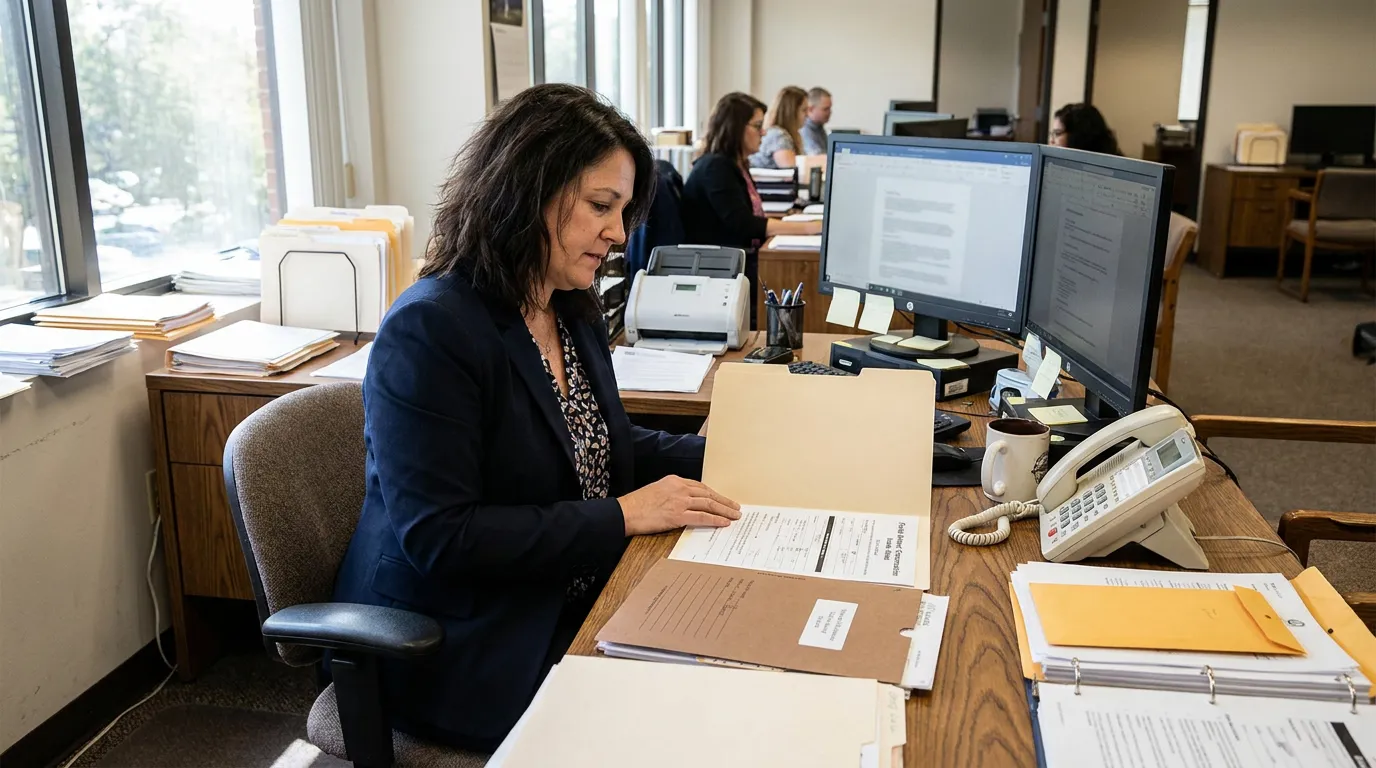
The Person Deciding Your Florida Work Injury Claim
Key Takeaways: A workers’ comp adjuster is the insurance-company employee who reviews your paperwork, authorizes or denies medical care, and sets wage-replacement benefits. Their interests differ from yours because they answer to the carrier that pays them. Florida’s exclusive-remedy system under Fla. Stat. § 440.11(1) channels disputes into a comp process built to deliver benefits at a reasonable cost to the employer, which helps explain why adjusters may evaluate claims with the insurer’s budget in mind rather than your maximum recovery. Common tactics include early recorded statements, rushed settlements, disputes over whether an injury arose at work, and delayed treatment authorizations. Protecting yourself means documenting everything, reporting your injury promptly (often within 30 days), and understanding your rights. A knowledgeable Sarasota attorney can help level the playing field.
When you get hurt on the job in Sarasota, the first voice you often hear from the insurance company belongs to a claims adjuster. That person reviews your paperwork, approves or denies your medical care, and decides your wage-replacement amount. Understanding who they are and why their goals may not match yours is crucial to protecting your recovery. A workers’ comp adjuster is the insurance-company employee assigned to evaluate and manage your claim. While they may be professional and courteous, they answer to the carrier that pays them.
At Greg Linehan Law, we help injured Floridians make sense of this process from day one. If an insurer is delaying your care or questioning your injury, reach out to Greg Linehan Law for a free case review, call our office at 941-559-4529, or send us a message through our online contact page. There are no upfront costs, and you deserve straight answers about your rights.

What a Workers’ Comp Adjuster Actually Does
A claims adjuster is the frontline decision-maker in nearly every workers’ compensation file. The adjuster analyzes workers’ compensation claims, reviews documentation, and authorizes payments. Their daily work determines whether your treatment moves forward or stalls, making their role central to your outcome.
The Core Function of the Role
The adjuster’s primary job is to examine documentation, determine whether compensation is appropriate, and if so, decide the amount. That authority covers medical bills, prescriptions, and wage-replacement checks. Because a single person holds this much control, small disputes over records or diagnoses can significantly impact your benefits.
💡 Pro Tip: Keep your own copies of every medical record, work note, and communication with the adjuster. Your documentation is often your best defense if a benefit is later questioned or cut off.
Experience Shapes How Adjusters Handle Claims
Adjusters develop deep insight through daily frontline experience. Industry observers note that seasoned adjusters "gain a keen empathy from the day-to-day frontline experience, as well as an intimate understanding" of the claims process. That experience can cut both ways, the same knowledge that helps a fair adjuster resolve a claim can also help identify reasons to limit one.
State Licensing and Qualifications
Adjuster requirements depend on the state where the claim is handled. Qualifications may include a state insurance adjuster’s license, criminal background check, and fingerprinting. In Florida, the person managing your file operates under state-specific rules, so practices can vary from what you might read about in other states.
Why the Adjuster’s Interests Differ From Yours in Florida
The heart of the issue is structural: the adjuster represents the insurer’s financial interests, and you represent your own. Florida’s workers’ compensation system is built on an exclusive-remedy framework, meaning workers’ comp is generally the sole avenue of recovery against your employer for a workplace injury. Under Fla. Stat. § 440.11(1) (2025), the liability of an employer is "exclusive and in place of all other liability, including vicarious liability" to the employee.
This framework exists because of a deliberate trade-off written into Florida law. In return for employer liability without regard to fault for workplace injuries, employees give up the right to a common-law negligence action against the employer. Once an employer secures compliant coverage under Fla. Stat. § 440.10, it generally becomes immune from tort suit, and disputes get channeled into the comp system administered by carriers and their adjusters. You can review the current text of the employer immunity statute to see how broadly that protection is written.
Legal commentators describe this exchange as a classic quid pro quo. As one Florida Bar Journal analysis explains, the employee "forgoes the right to sue in exchange for the employer’s assumption of liability without fault." The Florida Legislature intended employers to have immunity except in the most egregious circumstances, which you can read more about in this discussion of the intentional tort exception to employer immunity.
Cost control is also baked into the statute’s purpose. The law aims to assure quick and efficient delivery of benefits to an injured worker "at a reasonable cost to the employer." That cost-containment goal helps explain why an adjuster, who answers to the carrier, may evaluate your claim with the insurer’s budget in mind rather than your maximum recovery.
💡 Pro Tip: Being polite to an adjuster is fine, but remember that friendly conversation is still part of a claims evaluation. Assume that recorded statements and casual remarks may be reviewed later.
Common Workers Comp Adjuster Tricks to Watch Out For
Because their incentives differ from yours, certain patterns tend to surface in disputed claims. These tactics can quietly reduce or delay your benefits. Recognizing them early helps you respond before your claim is damaged.
- Requesting recorded statements early, sometimes before you fully understand your injuries, which can lock you into inconsistent descriptions.
- Pushing quick settlements that may not account for future medical needs or long-term wage loss.
- Disputing whether the injury arose in the course and scope of employment, a common ground for denial under Florida law.
- Delaying authorization for diagnostic tests or specialist referrals, which can stall treatment and discourage claimants.
- Interpreting medical opinions narrowly to limit the duration or type of benefits owed.
Understanding these insurance adjuster tactics in FL helps you protect your claim. The system places one party in control of your benefits while giving that party reasons to conserve costs. For a deeper look at these patterns, our guide on workers comp adjuster tricks to watch out for breaks down practical warning signs and how to respond.
💡 Pro Tip: You generally have the right to seek clarification in writing when a benefit is denied. A written explanation creates a record and can reveal whether the denial rests on a fixable paperwork issue.
Why Adjusters Enter the Field, and Why It Matters to You
The workers’ compensation industry faces recruitment and retention challenges. Industry sources report that attracting new professionals has become difficult, and many enter the field by happenstance. The frontline adjuster role is nonetheless viewed as a prime place to develop future leaders.
This context matters because your file may be handled by someone still building their judgment or juggling a heavy caseload. That is a practical reason to document everything and follow up consistently.
Protecting Your Injured Worker Rights in Florida
The most reliable protection is preparation combined with knowledge of your rights. Florida law imposes deadlines and documentation standards, including a general expectation that you report your workplace injury promptly, often within 30 days, though specific facts and exceptions can affect how these rules apply. Courts and administrators interpret many exceptions narrowly, so don’t assume a missed step will automatically be excused.
A knowledgeable advocate can help level a playing field that the statute tilts toward cost control. If you face a denial, benefit cutoff, or confusing settlement offer, guidance from a Sarasota workers comp attorney can help you understand your options. Outcomes always depend on the specific facts of your situation, and no attorney can guarantee a result.
💡 Pro Tip: Report your injury in writing and keep a dated copy. A clear paper trail often prevents disputes about whether and when you notified your employer.
Frequently Asked Questions
1. Does the workers’ comp adjuster work for me or the insurance company?
The adjuster works for the insurance carrier. Their duty is to examine documentation, determine whether compensation is appropriate, and set the amount, all within the insurer’s cost framework. That is why their interests can diverge from yours.
2. Why can’t I just sue my employer instead of dealing with an adjuster?
Florida’s exclusive-remedy rule generally bars suing your employer for a workplace injury. Under Fla. Stat. § 440.11(1), the employer’s liability is exclusive and replaces most other liability once coverage is in place. Narrow exceptions exist, such as certain intentional torts or failure to secure required coverage, but courts apply them strictly.
3. What are common workers comp adjuster tricks I should watch for?
Watch for early recorded statements, rushed settlements, and delayed treatment authorizations. These tactics can reduce or postpone benefits you may be owed. Documenting everything and seeking guidance can help you respond appropriately.
4. How quickly do I need to report a workplace injury in Florida?
Florida generally expects injured workers to report promptly, often within 30 days. Specific deadlines and exceptions depend on your case facts. Because these rules are applied narrowly, prompt reporting is the safest approach.
5. Can an adjuster deny my claim outright?
Yes, an adjuster can deny a claim based on their review of documentation. Common grounds include disputes over whether the injury arose in the course and scope of employment. A denial is not necessarily final and may be challenged through the appropriate administrative process.
Standing Up for Sarasota’s Injured Workers
Understanding who a workers’ comp adjuster is and why their interests differ from yours puts you in a stronger position from the very first phone call. Florida’s system is built on a trade-off that channels your claim through an insurer whose adjuster is focused on delivering benefits at a reasonable cost to the employer. Knowing that reality helps you document carefully, meet deadlines, and recognize insurance adjuster tactics before they harm your workers’ compensation claim in FL.
You do not have to navigate this system alone, and Greg Linehan brings more than 26 years of experience helping injured Floridians. To protect your workers’ comp benefits in Florida, contact Greg Linehan Law today, call our Sarasota office at 941-559-4529, or request your free case review through our secure contact form. We work on a contingency fee basis, so there are no upfront costs to get answers about your work injury claim in Florida.
This blog is for informational purposes only and does not constitute legal advice. Contact Greg Linehan Law to discuss your specific case.