Understanding Why Recorded Statements Matter in Your Florida Work Injury Claim
Key Takeaways: Florida workers’ comp adjusters use recorded statements to lock in answers that can reduce, delay, or deny benefits through timing traps, prior-injury fishing, minimization prompts, guessing pressure, and scope questions. Under Chapter 440, your words carry legal weight, and §440.09(4)(a) can strip benefits when a judge of compensation claims, court, or jury determines a claimant knowingly or intentionally engaged in fraud. Small inconsistencies can be reframed as misrepresentation since Florida defines a "statement" broadly, making recorded calls potential evidence. Adjusters must follow conduct standards requiring truthful, unbiased handling, and violations may constitute unfair claims settlement practices. Because Florida interprets facts neutrally rather than favoring injured workers, precision matters more than sympathy. Key protections include declining on-the-spot recordings, scheduling calls after consulting a lawyer, answering honestly, and saying "I’m not certain" rather than guessing.
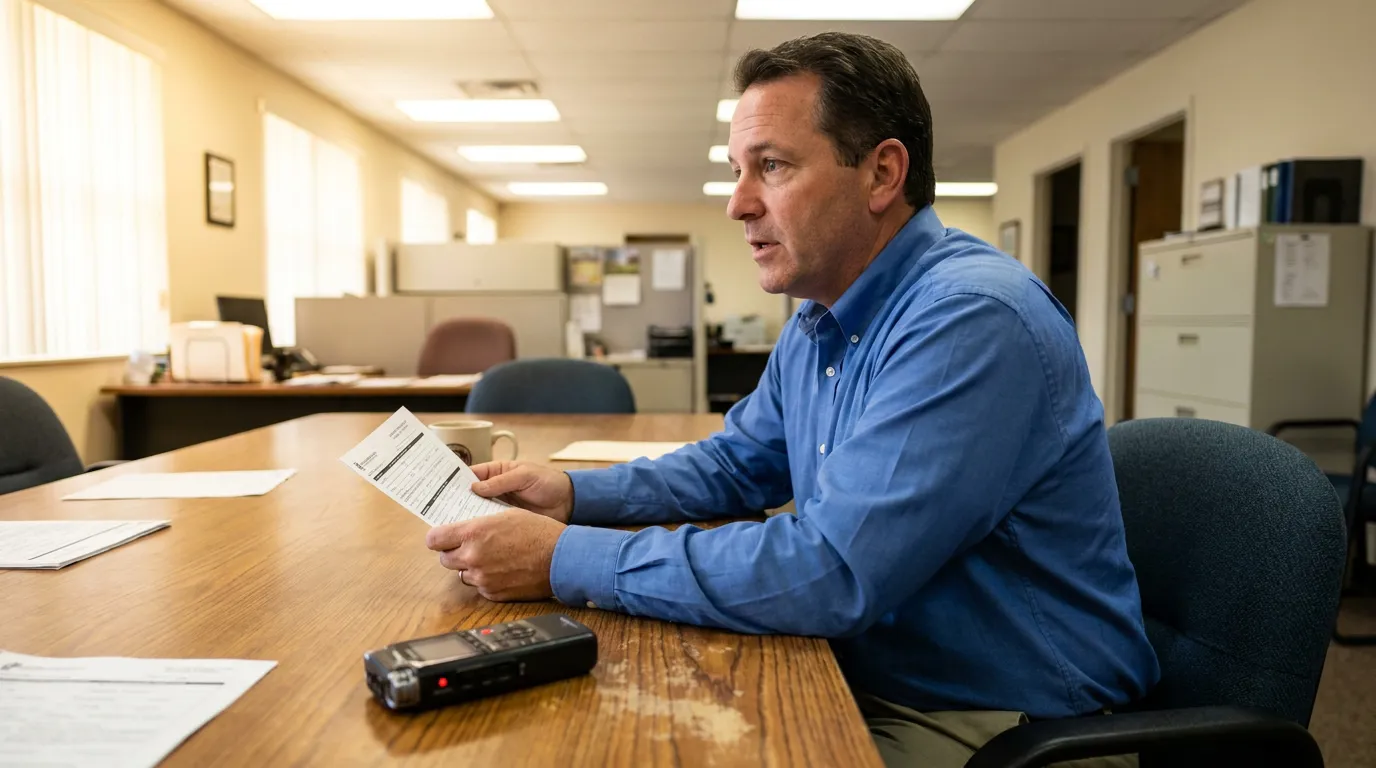
A recorded statement can quietly shape your entire workers’ compensation case. After a workplace injury in Sarasota, the insurance adjuster often calls within days, sounding friendly and eager to "get your side of the story." Many injured workers don’t realize questions are designed to lock in answers that can later reduce, delay, or deny benefits. The most common workers comp adjuster tricks to watch out for include leading questions about prior injuries, pressure to guess at facts, and subtle attempts to minimize your pain or misstate when your injury occurred.
At Greg Linehan Law, we help injured workers protect their claims before a single word is misinterpreted. If an adjuster has reached out, don’t navigate the conversation alone. Call our team at 941-559-4529, reach out through our confidential contact page, or learn more about how Greg Linehan Law advocates for injured Floridians.

Why Adjusters Rely on Recorded Statements in the First Place
Recorded statements exist because your words carry real legal weight under Florida law. Chapter 440 is the governing framework, and Fla. Stat. §440.01 confirms that the chapter "may be cited as the ‘Workers’ Compensation Law.’" Adjusters know anything you say can be measured against the statute’s strict definitions and fraud provisions.
The stakes are higher than most expect. Under Fla. Stat. §440.09(4)(a), an employee "shall not be entitled to compensation or benefits under this chapter" if a judge of compensation claims, administrative law judge, court, or jury determines the employee knowingly or intentionally engaged in acts described in §440.105, such as making false, fraudulent, or misleading statements, to secure benefits. Because forfeiture requires proof of intent, adjusters may use recorded statements to capture inconsistencies they can later frame as intentional misrepresentation.
Florida also defines a "statement" very broadly for fraud statutes. Fla. Stat. §440.02 explains that a statement includes "any notice, representation, statement, proof of injury, bill for services, diagnosis… or other evidence of loss, injury, or expense." Your recorded call is potential evidence, not casual conversation. Review the full text through Florida’s Workers’ Compensation Law.
💡 Pro Tip: You are generally not required to give a recorded statement on the spot. You may politely ask to schedule the call after speaking with a lawyer.
Workers Comp Adjuster Tricks to Watch Out for During Recorded Statements
The most damaging tactics usually feel harmless in the moment. Adjusters are trained to gather complete records, and some questions steer you toward answers that undercut your claim. Recognizing these workers comp adjuster tactics early helps you avoid costly missteps.
Common approaches injured workers encounter:
- Timing traps: Repeated questions about exactly when your injury started, hoping to suggest you missed the reporting window.
- Prior-injury fishing: Broad questions about old aches or unrelated medical history to argue your condition is pre-existing.
- Minimization prompts: Asking "you’re feeling better today, right?" to capture statements downplaying your pain.
- Guessing pressure: Pushing you to estimate distances, weights, or times when an honest "I don’t recall" would be more accurate.
- Scope questions: Probing whether you were truly performing job duties when injured.
Timing questions deserve special attention because Florida sets a firm reporting rule. Fla. Stat. §440.185(1) requires an injured employee to "advise his or her employer of the injury within 30 days after the date of or initial manifestation of the injury." Adjusters often press on notice details, so understanding this deadline helps you avoid answers contradicting your paperwork.
💡 Pro Tip: If you don’t remember a detail, saying "I’m not certain" is safer than guessing. Guesses can later be treated as inconsistencies.
How Florida Law Limits What Adjusters Are Allowed to Do
Adjusters are not free to manipulate your statement however they wish. Florida holds every adjuster to professional conduct standards applying regardless of who the adjuster works for. The rule covers all types and classes of insurance adjusters, including company employees, independent adjusters, and public adjusters subject to Chapter 626, Florida Statutes.
These standards impose meaningful duties on the adjuster handling your file. Under the Florida administrative rule governing adjuster conduct, an adjuster must make truthful and unbiased reports after complete investigation and must not approach investigations, adjustments, and settlements in a manner prejudicial to the insured. Leading or trap-style questioning can fall short of these requirements. Read the full Florida adjuster conduct rule for complete obligations.
The rule also frames claims handling as a matter of public trust. It provides that adjusting insurance claims engages the public trust and that an adjuster "shall put the duty for fair and honest treatment of the claimant above the adjuster’s own interests in every instance." When an adjuster ignores that duty, the conduct may support your argument that a recorded statement was gathered improperly.
Consequences When an Adjuster Crosses the Line
Violations of the conduct rule can carry real professional consequences. A breach may constitute grounds for administrative action against the licensee and can be classified as an unfair claims settlement practice, giving injured workers leverage when tactics become abusive.
Still, enforcement is fact-dependent and not automatic. These processes are separate from your workers’ compensation benefits case and generally don’t, by themselves, restore denied benefits. Courts and regulators consider full context before finding violations.
Why Precision Matters More Than Sympathy in Florida
Florida does not tilt the factual scale toward either party. Fla. Stat. §440.015 states that facts in workers’ compensation cases "are not to be interpreted liberally in favor of either the rights of the injured worker or the rights of the employer." Because neither side gets the benefit of the doubt, adjusters document aggressively, and claimants must be equally precise.
💡 Pro Tip: Before any recorded call, review your incident report and medical records so your account stays consistent with existing documents.
Practical Steps to Protect Your Claim
A few careful habits can make a significant difference in your case. These steps reduce the risk of statements being used against you. Consistency and honesty remain your strongest tools.
| Situation | What Often Helps |
|---|---|
| Adjuster requests a recorded statement | Ask to reschedule and consult counsel first |
| You don’t remember a detail | Say so plainly instead of guessing |
| Questions about old injuries | Answer honestly and stick to relevant facts |
| Pressure to say you feel "fine" | Describe your symptoms accurately, not optimistically |
Knowing your rights as an injured worker in Florida gives you stronger footing. For claim-handling questions and general guidance on communicating with a carrier, this Florida workers’ compensation resource offers a helpful injured worker FAQ.
Working with counsel early is often the most protective choice. Our team explains these issues in detail in our guide on workers comp adjuster tricks to watch out for, and we can be present for your recorded statement. Having a lawyer involved signals that your FL workers comp claim will be handled carefully.
💡 Pro Tip: You can request a copy of any recorded statement you give. Keeping your own record helps prevent selective or out-of-context use later.
Frequently Asked Questions
-
Do I have to give a recorded statement to the adjuster?
In many cases, you are not legally required to give a recorded statement immediately. While cooperation is generally expected, you may often schedule the call and speak with a Florida workers compensation lawyer first. This helps ensure your answers are accurate and complete.
-
Can one wrong answer really cause a workers comp denial in Florida?
A single misstatement can create serious problems, though context matters. Under Fla. Stat. §440.09(4)(a), benefits may be denied only when a judge of compensation claims, court, or jury determines an employee knowingly or intentionally engaged in prohibited acts, such as false or misleading statements, to secure benefits. Honest mistakes are generally treated differently from intentional fraud, but adjusters may still highlight inconsistencies.
-
What if I missed the 30-day reporting deadline?
The reporting rule is firm, but exceptions can apply in limited circumstances. Fla. Stat. §440.185(1) sets the 30-day window, yet certain situations may affect how it’s applied. Discuss your specific timeline with counsel.
-
Are adjusters allowed to trick me during a recorded statement?
Adjusters must follow conduct standards requiring fair and honest treatment. They are prohibited from handling investigations in a manner prejudicial to the insured, and violations can be treated as unfair claims settlement practices. Whether specific questioning crossed the line is fact-dependent.
-
How can a lawyer help with recorded statement requests?
A lawyer can prepare you, attend the call, and object to improper questions. This support helps protect your injured worker rights while keeping your account consistent. Recognizing workers comp adjuster tricks Florida claimants commonly face is central to that protection.
Protecting Your Benefits Starts With Your First Conversation
Recorded statements are one of the most underestimated risks in a Florida work injury claim. From timing traps to prior-injury fishing, the tactics are subtle but consequential, and Chapter 440’s strict fraud provisions mean your words truly matter. Understanding these workers comp adjuster tricks to watch out for empowers you to respond with accuracy and confidence. With 26+ years of experience and recognition including 2025 Super Lawyers and the 2025 Florida Justice Association, Greg Linehan brings a hands-on, community-rooted approach to every case.
You don’t have to face the insurance company alone, and there are no upfront costs to speak with us. As a trusted Sarasota workers comp attorney, Greg Linehan personally guides clients rather than passing them to a rotating team. Get your 100% free case review today by calling 941-559-4529, visiting our secure consultation form, or connecting with Greg Linehan Law to protect your benefits.
This blog is for informational purposes only and does not constitute legal advice. Contact Greg Linehan Law to discuss your specific case.