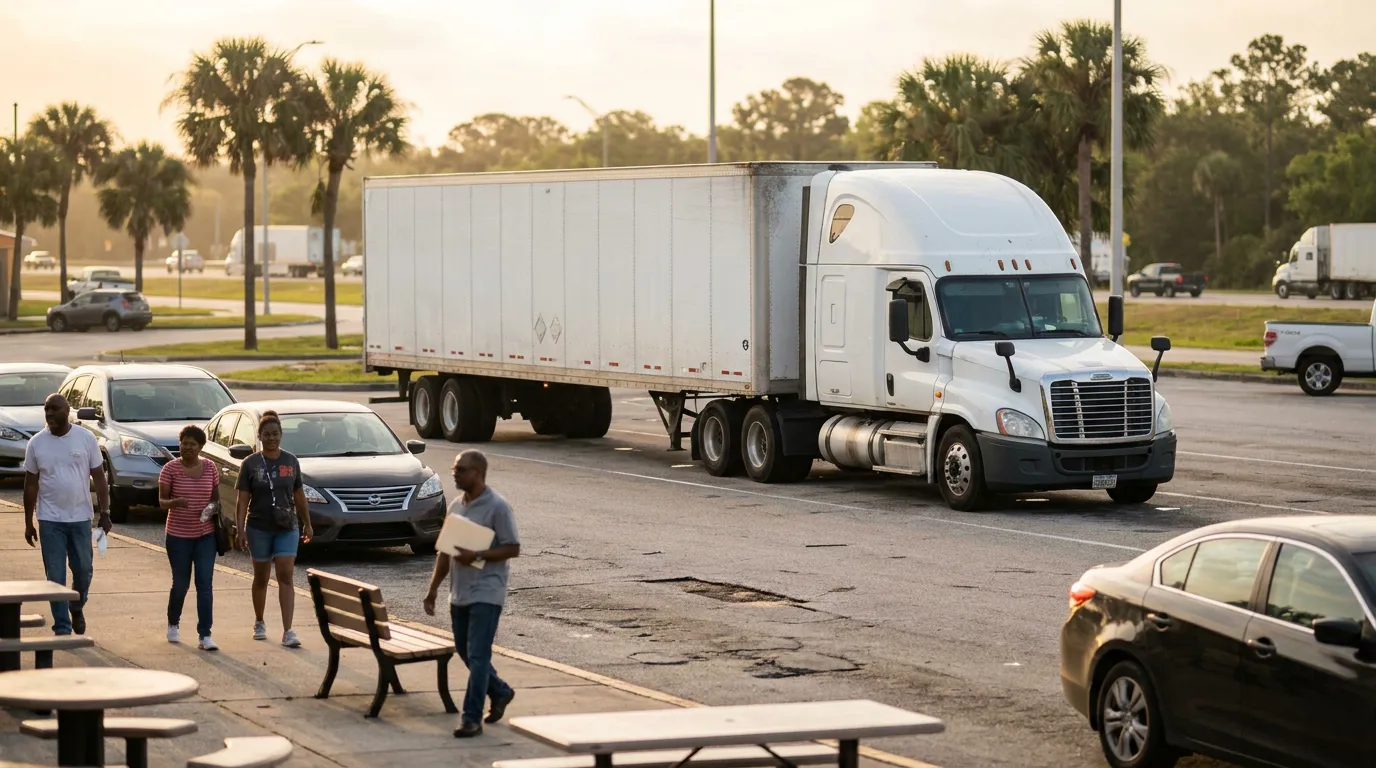
When a Commercial Truck Changes Your Life on Florida’s Highways
Key Takeaways: Filing a truck accident claim in Florida requires protecting your health, preserving time-sensitive evidence, identifying all negligent parties, and meeting critical deadlines. Florida’s no-fault system requires Personal Injury Protection coverage for initial medical bills, while a separate liability claim pursues full compensation from at-fault parties. Under 2023 HB 837 reforms, Florida follows modified comparative negligence, barring recovery if you’re found more than 50 percent at fault, and shortened the negligence lawsuit deadline to two years. Commercial trucking cases involve ELD data, driver logs, and multiple defendants including drivers, carriers, loaders, and manufacturers. Acting quickly to preserve evidence and consult an attorney significantly affects your recovery.
A collision with an 18-wheeler on I-75 or US-41 can turn an ordinary afternoon into a life-altering event. Filing a truck accident claim in Florida begins with protecting your health, preserving evidence, and understanding the laws governing your right to recover. You build a claim by documenting the crash, identifying every negligent party, notifying insurers, and filing suit before the legal deadline expires. Because commercial trucking cases often involve multiple parties and complex evidence, knowing the roadmap early protects your recovery.
At Greg Linehan Law, we help injured Floridians take these steps with confidence. If a commercial truck has upended your life, reach out to Greg Linehan Law for a 100% free case review, call our team at 941-559-4529, or contact us now to discuss your options.

Understanding How to File a Truck Accident Claim in Florida
Knowing how to file a truck accident claim in Florida starts with recognizing that these cases blend personal injury law, insurance law, and federal trucking regulations. A semi truck accident claim typically proceeds along two tracks: a first-party claim through your no-fault coverage, and a liability claim against the negligent trucker, motor carrier, or other responsible parties.
Florida operates under a no-fault insurance system requiring Personal Injury Protection coverage. Under Florida Statute § 627.736(1), qualifying policies must provide PIP to the named insured and relatives in the same household. Your PIP benefits generally pay a portion of medical bills regardless of who caused the crash, which is important for any Truck Accident in FL before liability is established.
💡 Pro Tip: Keep a dedicated folder, physical or digital, for every medical record, bill, repair estimate, and insurance letter. Organized documentation strengthens your claim and helps your attorney spot gaps early.
The Steps to Building a Strong Truck Crash Claim
Filing a truck accident claim follows a sequence of practical, time-sensitive steps. While every case differs, these Florida truck crash claim steps offer a reliable framework:
- Seek medical care immediately and follow all treatment recommendations, since gaps undermine your recovery.
- Report the crash to law enforcement and obtain the crash report.
- Notify your insurer promptly to preserve PIP benefits.
- Preserve evidence from the truck, including electronic and physical records.
- Consult an attorney to evaluate liability and protect your rights.
Preserving Time-Sensitive Evidence
Evidence proving a trucking company’s negligence can disappear within days. Commercial trucks generate electronic logging device (ELD) data, black-box information, driver logs, maintenance records, and cargo documentation, which carriers retain for limited periods. Sending a timely preservation letter is one of the most valuable early actions in filing a truck injury claim in Florida, putting carriers on notice that data must not be destroyed.
Identifying Every Responsible Party
Truck crashes frequently involve more than one at-fault party. Florida’s comparative fault system assigns each defendant liability for their own percentage of fault, which matters when a driver, trucking company, cargo loader, and parts manufacturer may all share blame. As the Florida Bar Journal explains, effective April 26, 2006, the legislature amended the apportionment statute to divide damages according to each party’s percentage of fault rather than joint and several liability.
💡 Pro Tip: Photograph the truck’s DOT number, license plate, trailer markings, and any visible cargo before vehicles are moved. These details help identify the carrier and potential additional defendants.
Notifying Your Insurer Promptly
Your insurance company may require prompt written notice after a crash. Under Florida Statute § 627.736(4)(a), an insurer may require written notice as soon as practicable after an accident. Notifying your carrier quickly preserves benefits and avoids giving the insurer reason to delay or dispute your claim.
Florida’s Comparative Fault Rules and What They Mean for Your Recovery
Florida’s comparative fault system directly shapes how much a truck crash victim can recover. Florida Statute § 768.81 codifies this framework. Under § 768.81(3), the court enters judgment against each party based on their percentage of fault, not joint and several liability, meaning your award is reduced in proportion to your own share of fault.
A major change arrived with the 2023 tort reform law, HB 837. Effective March 24, 2023, Florida moved from pure to modified comparative negligence. Under § 768.81(6), any party found greater than 50 percent at fault for their own harm may not recover damages. You can review the full text within Florida’s comparative fault statute.
The statute permits defendants to shift blame, with a narrow exception. A defendant can plead and prove that a codefendant or nonparty caused the plaintiff’s injuries, reducing that defendant’s liability, a common tactic in multi-party trucking litigation. The greater-percentage-of-fault bar does not apply to medical negligence claims under chapter 766.
💡 Pro Tip: Avoid giving a recorded statement to the trucking company’s insurer before speaking with your own attorney. Insurers may use your words to argue you were more than 50 percent at fault.
Deadlines That Can Make or Break Your Case
The most important deadline in a Florida truck crash claim is the statute of limitations. Following HB 837, the statute for negligence-based personal injury claims was reduced from four years to two years for causes accruing after March 24, 2023. Florida’s civil filing deadlines statute under § 95.11 governs time limits on negligence lawsuits.
The two-year clock generally begins on the date the injury occurs. Under Florida Statute § 95.031(1), a cause of action accrues when the last element occurs, which in most truck crashes is the collision day. Courts interpret tolling and discovery exceptions narrowly, so never assume the deadline will be extended.
Civil deadlines differ from insurance timelines. A PIP claim carries its own schedule separate from the lawsuit deadline. The table below summarizes key timeframes:
| Timeline | Legal Basis | General Rule |
|---|---|---|
| Negligence lawsuit deadline | § 95.11 (as amended by HB 837) | Two years from the date of injury for causes accruing after March 24, 2023 |
| PIP written notice | § 627.736(4)(a) | As soon as practicable after the crash |
| PIP benefits overdue | § 627.736(4)(b) | If not paid within 30 days of written notice of the loss and amount |
PIP benefits follow a defined payment window. Under Florida Statute § 627.736(4)(b), benefits are overdue if not paid within 30 days after the insurer receives written notice of the covered loss and amount.
How PIP and No-Fault Insurance Fit Into Your Claim
Your PIP coverage comes with responsibilities as well as benefits. Florida’s no-fault system pays regardless of who caused the crash, but claimants must cooperate with reasonable insurer conditions.
One frequent pitfall involves required medical examinations. Under Florida Statute § 627.736, if a person unreasonably refuses to submit to or appear at an examination, the PIP carrier is no longer liable for subsequent benefits. Attending scheduled examinations and keeping records protects your continued coverage.
Trucking cases can be far more complex than typical crashes. The Florida Bar Journal notes that in simple automobile collisions, apportionment is straightforward. Commercial truck cases often require accident reconstruction and regulatory analysis, which is a strong reason to consult a lawyer early.
Frequently Asked Questions
1. How long do I have to file a truck accident claim in Florida?
In most cases, you have two years from the crash date. For negligence causes accruing after March 24, 2023, § 95.11 as amended by HB 837 sets a two-year deadline. Limited exceptions may apply, but courts interpret them narrowly.
2. What happens if I was partly at fault for the crash?
Under Florida’s modified comparative negligence rule, partial fault reduces your recovery. Section 768.81(6) bars recovery if you’re found greater than 50 percent at fault. If you’re 50 percent or less at fault, damages are reduced by your percentage of responsibility.
3. Will my PIP coverage pay even if the truck driver caused the crash?
Yes, PIP generally pays regardless of fault. Florida Statute § 627.736(1) requires this coverage for the named insured and household relatives. PIP is a starting point; a separate liability claim against at-fault parties pursues additional compensation.
4. Can more than one party be held responsible in a truck crash?
Often, several parties can share liability. Depending on facts, a driver, motor carrier, cargo loader, or parts manufacturer may each bear a portion of fault under § 768.81. Identifying every responsible party is key to pursuing full compensation.
5. Do I need a lawyer to file a truck accident claim in Florida?
You are not required to hire counsel, but trucking cases are complex. Preserving ELD data, analyzing regulatory violations, and navigating comparative fault often benefit from experienced legal guidance. A free consultation helps you understand your options before deadlines pass.
Protecting Your Right to Full Compensation After a Truck Crash
Filing a strong claim comes down to acting quickly, preserving evidence, and understanding the Florida statutes governing your recovery. From PIP notice requirements and the two-year filing deadline to modified comparative negligence, each legal detail can meaningfully affect your outcome. Because trucking cases involve time-sensitive records and multiple potential defendants, decisions in the first days often matter most. Greg Linehan brings more than 26 years of experience and recognition including 2025 Super Lawyers and 2024 Lawyers of Distinction honors, working directly with each client rather than handing your case to a rotating team. As a dedicated Sarasota truck accident attorney, Greg is deeply rooted in this community and committed to holding negligent parties and insurers accountable.
You do not have to navigate this alone, and there is never a cost to speak with us. Get your 100% free case review today with Greg Linehan Law, call 941-559-4529, or reach out to our team to protect your rights on a contingency fee basis.
This blog is for informational purposes only and does not constitute legal advice. Contact Greg Linehan Law to discuss your specific case.