
The Digital Clock That Starts Ticking the Moment a Semi Hits Your Car
Key Takeaways: Semi-truck crash data lives in several separate systems, including ECM event snapshots, electronic logging devices, and fleet telematics, each with its own short lifespan. ECM records can be overwritten within days if the truck keeps driving, while federal rules require carriers to keep records of duty status and supporting documents for only six months under 49 C.F.R. § 395.8(k)(1). Damaged tractors are revenue assets that are often repaired, sold, or returned to service before anyone inspects the module, which is frequently cited as a leading practical cause of data loss. Florida’s Long Form crash report, due within 10 days of an officer’s investigation, documents the scene but generally does not include ECM downloads or telematics histories. A prompt spoliation letter to the carrier, its insurer, and any telematics vendor is often among the first meaningful steps toward protecting that evidence. For most negligence claims accruing after March 24, 2023, Florida’s two-year deadline under Fla. Stat. § 95.11(5)(a) is generally the outer boundary for filing, but the practical deadline for preserving black box data may arrive far sooner.
The most important evidence in your truck crash case may be erased before you leave the hospital. Modern tractor-trailers record speed, braking, throttle position, engine hours, and vehicle movement, but that data cycles and expires as part of normal operation, and often the carrier controls the only copy. For families along the I-75 and US-41 corridors recovering from a catastrophic collision, semi truck black box data preservation can be the difference between a provable claim and a swearing match.
If a commercial truck injured you or someone you love, Greg Linehan Law can begin working to secure that evidence right away. Call 941-559-4529 or reach out for a free case review to discuss what steps may protect your claim.
What a Semi-Truck "Black Box" Actually Records
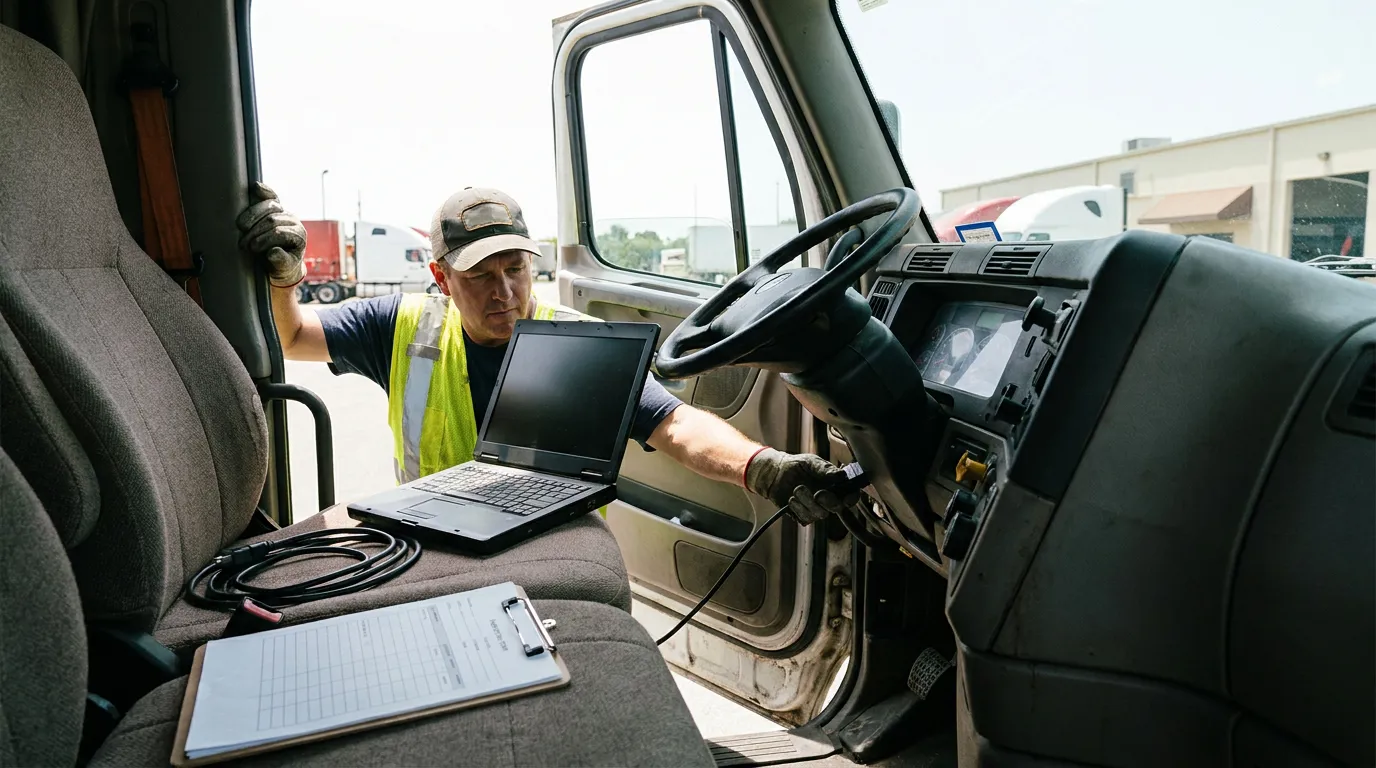
The term "black box" covers several separate data systems, each with its own lifespan. The engine control module (ECM) may capture snapshots tied to hard braking or sudden deceleration, though what’s recorded and for how long varies by manufacturer. Federal law also requires most commercial drivers subject to records-of-duty-status rules to use electronic logging devices recording driving time, engine hours, movement, and location under 49 C.F.R. § 395.8(a)(1)(i), subject to exemptions like short-haul operations. Fleet telematics systems add GPS pings, speed histories, and sometimes dash camera footage.
ECM Event Data
The ECM generally holds a limited number of event records. When new hard-braking or fault events occur, older records may be dropped. Continued driving after a wreck, or even repeated engine key cycles, can contribute to ECM data overwrite before anyone downloads the module.
ELD and Telematics Records
Electronic logging output lives partly on the device and partly on carrier servers. Technical rules governing ELD recording, storage, and data transfer appear in Part 395, Subpart B, and those storage limits can affect how long crash-relevant information stays accessible. A carrier following its ordinary retention schedule may purge records without intent to hide anything, though a purge after a preservation duty attaches can carry consequences.
Why Black Box Data Loss Happens So Quickly
Federal retention rules are shorter than most crash victims expect. Under 49 C.F.R. § 395.8(k)(1), motor carriers must retain drivers’ records of duty status and supporting documents for six months from receipt. After that, no federal rule compels retention, though a preservation obligation from anticipated or pending litigation can require it longer. Six months sounds generous until you consider how long medical treatment, insurance handling, and attorney hiring typically take.
Physical evidence can disappear even faster. Tractors and trailers are revenue-producing assets, so carriers and insurers frequently move to inspect, repair, or return equipment to service within days. Once a damaged tractor is repaired, sold, or salvaged, the module holding crash data may go with it. That practical reality, rather than any single statute, is often the leading cause of black box data loss in Florida truck crash claims.
Florida’s general record-keeping statute generally doesn’t fill the gap. Fla. Stat. § 320.0715 addresses apportioned registration under the International Registration Plan, requiring carriers to maintain related records for four years. That rule addresses registration records, not ECM downloads or telematics streams, which is one reason crash data remains vulnerable.
How Florida Law Shapes a Truck Crash Investigation
Official crash documentation follows its own timeline, separate from the vehicle’s electronic memory. Under Fla. Stat. § 316.066(1)(a), a Florida Traffic Crash Report, Long Form must be submitted within 10 days after an officer investigates a crash involving death, injury, DUI, a required tow, or a commercial motor vehicle. That report can anchor a claim, though Fla. Stat. § 316.066(4) limits the use of crash reports and driver statements as evidence in any trial, civil or criminal.
The Long Form generally doesn’t contain the granular data that can decide disputed liability cases. Officers record positions, statements, and citations; they generally don’t download the ECM or pull telematics histories, except in specialized traffic homicide investigations. Victims and counsel may need to act independently and quickly to capture that layer of Florida truck crash evidence.
The Two-Year Filing Deadline Is Not the Real Deadline
Under Fla. Stat. § 95.11(5)(a), a negligence action accruing on or after March 24, 2023 generally must be brought within two years; claims accruing earlier had four years, and wrongful death claims are governed separately under Fla. Stat. § 95.11(5)(e). Exceptions exist but apply narrowly. More importantly, the limitations period says nothing about evidence survival, data can vanish long before the deadline if no one secures it promptly.
| Evidence Type | Typical Vulnerability Window | Who Usually Controls It |
|---|---|---|
| ECM event snapshots | Days to weeks; subject to overwrite | Carrier or repair facility |
| ELD records of duty status | 6-month federal minimum retention | Motor carrier |
| Telematics and GPS histories | Varies by vendor contract | Carrier or third-party vendor |
| Long Form crash report | Filed within 10 days of investigation | Law enforcement agency |
Preservation Letters and Spoliation Exposure
A spoliation letter is often among the first meaningful steps after a serious collision. This written demand notifies the carrier, its insurer, and any telematics vendor that specific data categories must be preserved and equipment shouldn’t be repaired or sold before inspection. A letter isn’t a court order, but it can help establish notice of a preservation duty and may convert a routine purge into a litigated dispute the defense would rather avoid.
Florida’s evidence code also matters when data goes missing. Under Fla. Stat. § 90.803(10), evidence that a diligent search failed to disclose a record may be admissible to prove the record’s absence, subject to the rule’s conditions. Arguments about what a failed search proves are fact-dependent, but the evidence code gives both sides a framework for litigating the gap. Separately, Florida doesn’t recognize an independent cause of action for first-party spoliation against a party defendant; remedies generally come through sanctions, discovery relief, or evidentiary inferences.
💡 Pro Tip: Photograph the tractor’s DOT number, trailer number, and any visible telematics antennas or dash cameras at the scene if you safely can. Identifying the vendor early can make a preservation demand far more precise.
Why Carriers Have Strong Incentives to Control the Data
Trucking defendants in Florida may face layered liability, raising the stakes of every download. Florida’s dangerous instrumentality doctrine may impose vicarious liability on vehicle owners and employers for a driver’s negligence, subject to exceptions like the federal Graves Amendment for certain lessors. A negligent hiring or retention claim may also open internal records such as driver qualification files and prior violations, though Florida courts have sometimes limited such claims where vicarious liability is already admitted. The Florida Bar Journal’s analysis of commercial driver liability examines how these theories intersect.
That compounded exposure can explain the urgency on the defense side. Rapid response teams are often on scene within hours, photographing, measuring, and interviewing. Nothing about that is improper, but it can mean an injured person acting alone is behind from day one.
Steps That Generally Help Protect Your Claim
- Seek medical care promptly and follow through with treatment.
- Request the Long Form crash report once available.
- Preserve your own photographs, dash cam footage, and witness contacts.
- Avoid recorded statements to the carrier’s insurer before speaking with counsel.
- Ask an attorney about sending preservation demands within days, not months.
Understanding what documents a truck accident claim needs can help you organize your file while your case develops.
How Our Team Approaches Semi Truck Black Box Data Preservation
Greg Linehan has practiced Florida personal injury law for more than 26 years, and he handles these cases personally. Clients work directly with Greg and his legal assistant rather than being passed between departments. Recognitions including Lawyers of Distinction 2024, 2025 Super Lawyers, and membership in the 2025 Florida Justice Association reflect that hands-on approach, though no recognition predicts any particular result.
Our office is rooted in this community. Greg has served as President of Suncoast Charities for Children since 2020 and sits on the board of the Suncoast Foundation for Handicapped Children. When you call a Sarasota truck accident lawyer who lives and works here, you reach someone familiar with the roads, courts, and carriers that run these routes. We handle injury matters on a contingency fee basis, with no attorney’s fees or costs charged up front; clients may remain responsible for certain costs as set out in the written fee agreement.
💡 Pro Tip: If the truck was still drivable and left the scene under its own power, tell your attorney immediately. Continued operation is one of the more common ways event records can get pushed out of memory.
Frequently Asked Questions
1. How fast can semi truck black box data actually be lost?
There’s no single answer. ECM event memory may cycle within days of continued driving, while records of duty status and ELD supporting documents carry a six-month federal minimum retention under 49 C.F.R. § 395.8(k)(1). Vendor contracts for telematics data retention vary widely, so treating the window as short is generally the safer assumption.
2. Can I get the black box data myself?
Generally not without the carrier’s cooperation or legal process. The module and data typically remain in the carrier’s possession, and downloading requires proprietary tools and proper protocols. An attorney can pursue preservation demands, agreed inspection protocols, or a court order where appropriate.
3. What happens if the carrier destroys the data?
It depends on the facts and the court. Where a duty to preserve existed and evidence was lost, courts may consider remedies ranging from evidentiary inferences to discovery sanctions, but outcomes depend heavily on culpability and prejudice, and are never automatic.
4. Does the police crash report include ECM data?
Typically not. The Long Form required under Fla. Stat. § 316.066 documents the officer’s investigation, but generally doesn’t include an ECM download or telematics records.
5. Do I still need the data if liability seems obvious?
Often yes. Carriers frequently dispute speed, reaction time, and comparative fault, and a truck event data recorder in Florida may help corroborate your account when the other side’s version shifts.
Acting Early Protects Options You Cannot Recover Later
Time can work against injured people in trucking cases in a way it often doesn’t in ordinary car collisions. The vehicle is a business asset, the data has a limited shelf life, and the people who control it answer to an insurer. Florida’s two-year negligence deadline generally sets the outer boundary for filing suit in most cases, but the practical deadline for preserving truck crash evidence may arrive far sooner. Every case turns on its own facts, and no outcome can be promised.
If you were hurt in a collision with a commercial truck, Greg Linehan Law is ready to listen. Get your 100% free case review today by calling 941-559-4529 or contacting our Sarasota office now.
Disclaimer: This content is for informational purposes only and is not legal advice. Every case is unique, and results may vary. Consult an attorney about your specific circumstances.