
When a Semi-Truck Swings Wide: Understanding Fault After a Right-Turn Collision
Key Takeaways: When a truck swings wide to make a right turn in Florida, fault is not automatic, but the truck driver often bears significant responsibility. Florida law requires right turns to be made as close as practicable to the right-hand curb or edge of the roadway. Drivers must stay as nearly as practicable within a single lane, signal continuously for at least the last 100 feet, and confirm the move can be made with reasonable safety. Offtracking explains why trucks swing wide, but it generally does not excuse a driver who turns into space occupied by another vehicle, cyclist, or pedestrian. Florida divides fault by percentage among all responsible parties. Under the 2023 modified comparative negligence rule, an injured person who is 50 percent or less at fault can generally still recover reduced damages, but recovery is generally barred above 50 percent. Evidence such as ELD data, dashcam footage, and maintenance records can disappear quickly, and most negligence claims accruing after March 24, 2023 must generally be filed within two years.
You are stopped at a light on US-41 in Sarasota when an 18-wheeler in the lane to your left drifts toward you, then cuts hard to the right across your hood. In seconds, your car is crushed against the side of the trailer. The trucking company’s insurer may call quickly and suggest you should have seen the truck’s signal. In many cases, though, the law places significant responsibility on the professional driver. Under Florida law, fault in a truck wide right turn accident fault dispute is generally divided by percentage among everyone who contributed, including the truck driver, the trucking company, and sometimes other motorists.
If you or a loved one was hurt in a wide-turn truck crash, Greg Linehan Law can help you understand your rights and protect key evidence before it disappears. Call 941-559-4529 or contact us now for a free case review. You pay nothing unless we win.
Why Big Trucks Swing Wide in the First Place
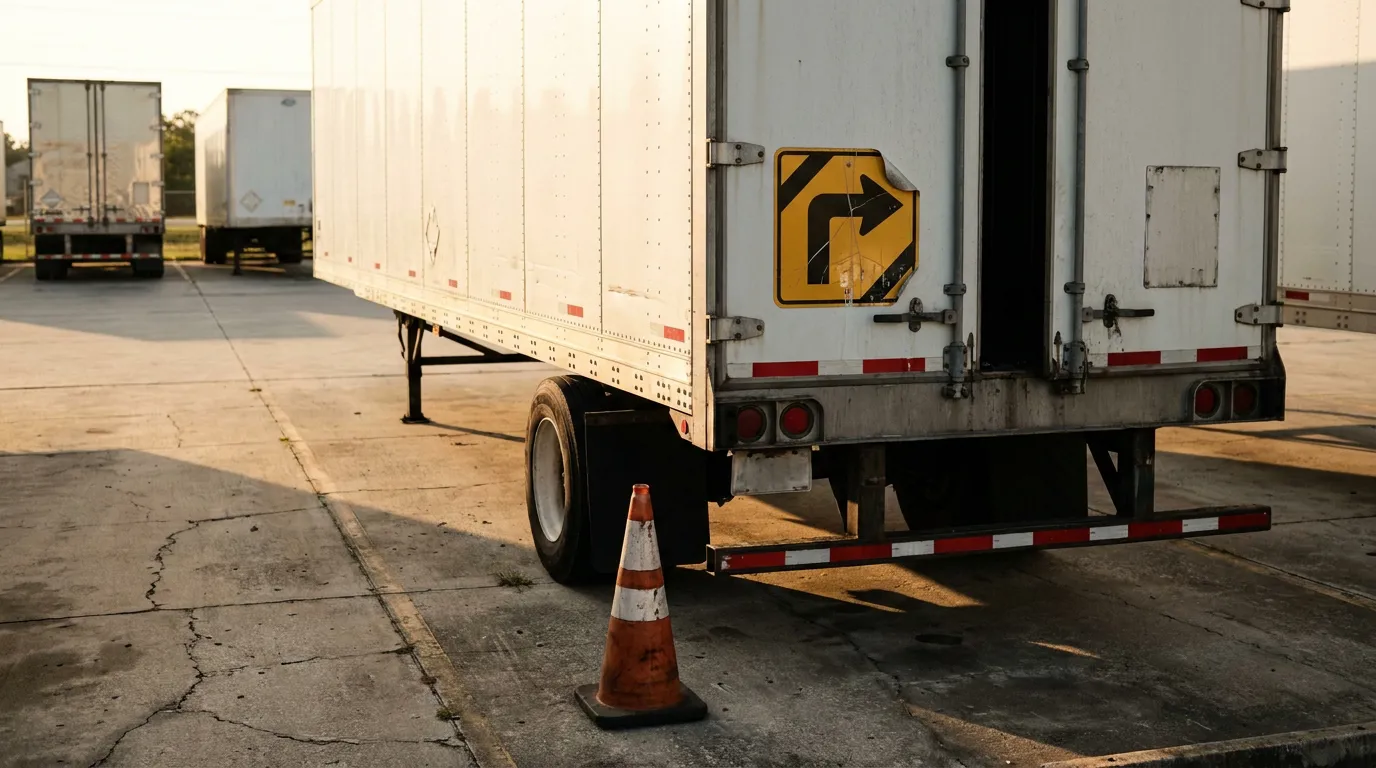
Large trucks have a long wheelbase, which creates a problem engineers call "offtracking." During a turn, the rear wheels follow a tighter path than the front wheels. To keep the trailer from going over the curb, many drivers swing the front of the truck left before turning right.
Because the wide swing is predictable, a careful commercial driver should plan for it. Drivers are expected to check mirrors, signal early, and make sure the space they need is clear. Offtracking explains why trucks swing wide, but it generally does not permit a driver to turn into a lane occupied by another vehicle, a cyclist, or a pedestrian.
The Florida Traffic Laws That Shape Truck Right Turn Liability
Several provisions in Florida’s traffic control statutes set the rules a truck driver must follow when turning right. These rules often form the backbone of a truck right turn liability claim. In Florida civil cases, violating a traffic statute is generally treated as evidence of negligence, not negligence per se.
Turning "As Close as Practicable" to the Curb
Under Fla. Stat. § 316.151(1)(a)1., a driver turning right must make both the approach and the turn as close as practicable to the right-hand curb or edge of the roadway. A long truck may lawfully need some extra room. Still, a truck that swings far left or into another lane without first making sure that move is safe may be violating this rule.
Fla. Stat. § 316.151(2) adds an exception. Authorities may install traffic control devices requiring a different turning path, and drivers must follow them.
Staying in the Lane and Moving Only When Safe
Fla. Stat. § 316.089(1) requires that, on roads with marked lanes, a vehicle be driven as nearly as practicable entirely within a single lane. The driver may not leave that lane until first confirming the move can be made safely. A truck that drifts into a neighboring lane to set up its right turn may break this rule.
Fla. Stat. § 316.155(1) reinforces this duty. No one may turn at an intersection until the movement can be made with reasonable safety, and the driver must signal whenever another vehicle may be affected. When a trucker swings left before turning right, drivers in the next lane may be affected.
Signaling Rules and Visibility
Fla. Stat. § 316.155(2) requires a turn signal to be given continuously for at least the last 100 feet before turning. Whether the truck signaled long enough, and whether you could actually see the signal, is often a key factual question.
If a truck’s electric signals failed or were blocked from view, hand signals may come into play. Under Fla. Stat. § 316.157(1)(b), a right-turn hand signal is given from the left side of the vehicle with the hand and arm extended upward. That is impractical in a tractor-trailer, so broken or dirty signal lamps may point to maintenance failures by the carrier.
Special Protection for Cyclists
Wide right turns pose serious danger to bicyclists riding alongside a truck. Under Fla. Stat. § 316.151(1)(a)2., a driver overtaking a bicycle and planning to turn right must signal. The driver may turn only if the bicycle is at least 20 feet from the intersection and far enough away for the turn to be made safely.
💡 Pro Tip: If the officer at the scene cited the truck driver, ask for the crash report number and keep a copy. A citation is not the final word on civil fault, but it may be useful evidence.
How Florida Divides Truck Wide Right Turn Accident Fault
Florida assigns fault by percentage rather than placing all of the blame on one person. Under Fla. Stat. § 768.81(3), the court enters judgment against each liable party based on that party’s percentage of fault, not joint and several liability. Vicarious liability is different. For example, an employer may still be responsible for an employee driver’s share of fault.
The 2023 Modified Comparative Negligence Rule
Florida changed its comparative fault rules in 2023, and the change can significantly affect your claim. The 2023 amendments apply to most negligence actions filed after March 24, 2023. For those cases, Florida’s comparative fault statute at § 768.81(6) bars recovery if the jury finds the injured person more than 50 percent at fault. If you are 50 percent or less at fault, your damages are generally reduced by your share under § 768.81(2).
| Your Share of Fault | Likely Effect on Recovery (Most Negligence Claims) |
|---|---|
| 0% | Damages generally not reduced for your fault |
| 20% | Damages generally reduced by 20% |
| 50% | Damages generally reduced by 50% |
| 51% or more | Recovery generally barred under § 768.81(6) |
This is why insurers in a Florida wide turn truck crash often try to shift blame onto the injured driver. They may argue you tried to "squeeze" past the truck or ignored its signal. Careful investigation of the truck’s path, signal timing, and lane position can make a real difference.
Who Else May Share Responsibility
The truck driver is often not the only party whose conduct matters. Depending on the facts, responsibility may extend to:
- The trucking company, which may be responsible for its driver’s conduct and for its own hiring, training, or supervision decisions
- A maintenance provider whose work left turn signals or mirrors defective
- A cargo loader whose improper loading affected the truck’s handling
- Another motorist whose actions contributed to the collision
Because Florida divides fault by percentage, identifying every responsible party can be essential to pursuing full compensation. Our article explaining who can be held liable after a semi-truck crash covers this topic in more depth. Defendants may also ask the jury to assign fault to people who are not part of the lawsuit, and that portion of fault may go uncompensated.
Evidence That Can Prove What Really Happened
Wide-turn cases often turn on precise details that can disappear quickly. Electronic logging device (ELD) data, black-box recordings, dashcam footage, driver logs, and maintenance records may show speed, braking, signal use, and hours of service. Federal Motor Carrier Safety Administration (FMCSA) rules require carriers to keep many of these records, but only for limited periods, and other data may be overwritten sooner.
Acting quickly to send a preservation letter can help keep this evidence from being lost. Intersection cameras, nearby business surveillance, and witness statements are also valuable. Accident reconstruction can then compare the truck’s actual turning path with what Florida law required.
💡 Pro Tip: If you are able, photograph the intersection’s lane markings, turn signs, and curb layout soon after the crash. Road markings may later be repainted or changed.
Time Limits and Practical Steps After a Crash
Florida law sets deadlines for filing injury lawsuits, and missing one may end your claim. Under Fla. Stat. § 95.11, most negligence claims accruing after March 24, 2023 must generally be filed within two years. Claims that accrued earlier generally fall under the prior four-year deadline. Wrongful death claims also generally carry a two-year deadline. Claims involving government entities may require written pre-suit notice under Fla. Stat. § 768.28 and may follow different deadlines.
Working with a local attorney early can help you protect both your evidence and your deadline. Greg Linehan has more than 26 years of experience representing injured Floridians, and clients work directly with him and his legal assistant rather than being passed around a large firm. If you need a truck wide right turn accident fault lawyer in our community, you can learn more about how a truck wide right turn accident fault lawyer at our firm approaches these cases.
Frequently Asked Questions
1. Is the truck driver automatically at fault if the truck swung wide?
No, fault is not automatic. Courts and juries look at all the facts, including signal use, lane position, road markings, and the other driver’s actions. However, Fla. Stat. §§ 316.151, 316.089, and 316.155 impose clear duties on truck drivers that often weigh heavily in these cases.
2. What if I tried to pass the truck on the right while it was turning?
Your recovery may be reduced, but not necessarily eliminated. Under Fla. Stat. § 768.81, if you are found 50 percent or less at fault, you may still recover damages reduced by your share. If you are found more than 50 percent at fault, recovery is generally barred.
3. Can I sue the trucking company and not just the driver?
In many cases, it may be possible. Trucking companies may be vicariously liable for their drivers’ conduct within the scope of employment. They may also be directly liable for their own negligent hiring, training, supervision, or maintenance practices.
4. Does a traffic ticket prove the truck driver caused the crash?
A citation can be useful evidence, but it does not settle civil liability by itself. Florida law also limits whether a citation, or a payment of one, can be admitted as evidence in a civil trial.
5. How long do I have to file a claim?
For most negligence claims accruing after March 24, 2023, Fla. Stat. § 95.11 generally allows two years. Speaking with an attorney early can help protect your rights.
Protecting Your Family After a Wide-Turn Truck Crash
Determining fault after a truck swings wide depends on Florida’s turning, lane-use, and signaling laws, combined with the state’s modified comparative negligence rules. Insurers may try to place blame on you, but evidence like ELD data, maintenance records, and intersection footage can help show what really happened. Acting quickly helps preserve that evidence and protects your filing deadline.
Greg Linehan has served the Sarasota community for decades, including as President of Suncoast Charities for Children since 2020. Get your 100% free case review today with Greg Linehan Law. Call 941-559-4529 or schedule your free consultation. We work on a contingency fee basis, so you pay nothing unless we win.
This blog is for informational purposes only and does not constitute legal advice. Contact Greg Linehan Law to discuss your specific case.
Disclaimer: This content is for informational purposes only and is not legal advice. Every case is unique, and results may vary. Consult an attorney about your specific circumstances.