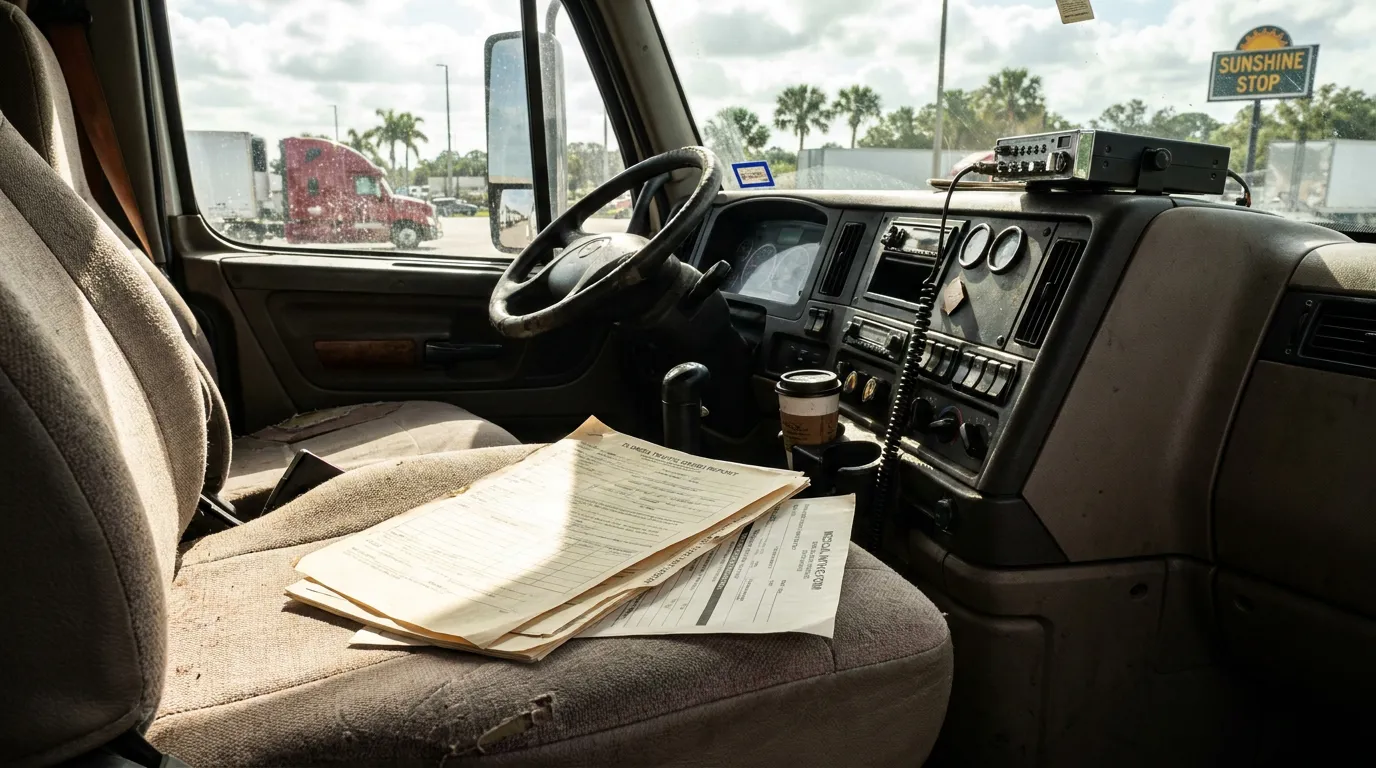
After a Truck Crash in Florida: Where Your Claim Begins
Key Takeaways: Filing a truck accident claim in Florida begins with gathering the right documentation, since the strength of your paperwork often determines your recovery. Core documents include the crash report and citations, insurance policy and proof of loss, complete medical records, photographs and physical evidence, and for commercial trucks, driver logs and black box data. Because Florida is a no-fault state, you turn first to your own PIP insurer with written notice as soon as practicable while submitting bills to trigger the 30-day payment window. Florida’s modified comparative negligence rule bars recovery if you are more than 50 percent at fault. Claims involving government-owned trucks require written presentation and personal identifying information and are subject to damage caps. Strict deadlines under Fla. Stat. § 95.11, now generally two years for negligence, make prompt action essential.
Filing a truck accident claim in Florida starts with gathering the right paperwork, because your recovery often rises or falls on documentation strength. Essential documents include the crash report, insurance policy and proof of loss, complete medical records, photographs and physical evidence, and for commercial trucks, driver logs and black box data. Knowing how to file a truck accident claim in Florida means understanding what to collect and when the law requires you to act. At Greg Linehan Law, our team helps injured people in Sarasota and along the I-75 and US-41 corridors organize these records so nothing time-sensitive slips away.
If you or a loved one was hurt in a collision with a semi or 18-wheeler, you do not have to sort through this alone. Get your 100% free case review with Greg Linehan Law, call our office at 941-559-4529, or reach out through our contact page to start protecting your rights today.

Why Documentation Makes or Breaks a Florida Truck Crash Claim
Strong documentary evidence is not a formality in a truck accident claim Florida residents pursue; it is often the deciding factor. Florida follows modified comparative negligence, so your own share of fault matters. Under Fla. Stat. § 768.81(2), contributory fault chargeable to the claimant diminishes the award proportionally but does not automatically bar recovery, meaning careful proof of the truck driver’s fault can directly affect what you receive.
However, there is a hard ceiling built into the statute. Under Fla. Stat. § 768.81(6), a party found more than 50 percent at fault may not recover any damages. Because defendants may shift blame, thorough truck accident evidence FL claimants gather early can be the difference between a viable case and a barred one.
💡 Pro Tip: Save everything, even items that seem minor. Repair estimates, text messages, and dashcam clips can corroborate your account long after memories fade.
The Core Documents You Need to Support Your Claim
Most truck accident documents Florida claimants rely on fall into a few predictable categories, and building each one strengthens the whole. Because Florida is a no-fault state, your first stop is often your own insurer. Under Fla. Stat. § 627.736 (2024), a policy complying with s. 627.733 must provide personal injury protection (PIP) benefits to the named insured and other specified persons, making your PIP coverage central from day one.
Accident and Insurance Records
Your crash report and insurance information form the backbone of any commercial truck accident Florida file. These records establish who was involved, where the collision occurred, and which policies may apply. Under Fla. Stat. § 627.736(4)(a), an insurer may require written notice to be given as soon as practicable after an accident, so prompt reporting protects your access to benefits.
Helpful records include:
- The official crash report and any citation issued
- Your auto insurance declarations page showing PIP coverage
- Photographs of vehicle damage, road conditions, and injuries
- Names and contact details for witnesses and responding officers
Medical Records and Proof of Loss
Complete medical documentation proves both your injuries and the amount of your loss. PIP benefits are time-sensitive. Under Fla. Stat. § 627.736(4)(b), benefits are overdue if not paid within 30 days after the insurer is furnished written notice of the fact of a covered loss and of the amount of same. You can review the full text of the Florida PIP statute to understand these obligations in detail.
Cooperation with medical examinations may be required to keep benefits intact. Under Fla. Stat. § 627.736, if a person unreasonably refuses to submit to or fails to appear at an ordered examination, the PIP carrier is no longer liable for subsequent benefits. Keeping organized records of treatment, referrals, and appointments helps demonstrate compliance.
💡 Pro Tip: Ask each provider for itemized bills and records at the time of your visit. Requesting them later can take weeks you may not have.
Evidence of the Truck Driver’s Fault
Proving fault in a truck crash claim FL victims file often depends on evidence that only a commercial carrier controls. Electronic logging device data, driver hours-of-service logs, maintenance histories, cargo records, and the truck’s black box become invaluable. This material can disappear quickly, which is why our team moves fast to preserve it. Our guide on when to consult a lawyer after a truck collision walks through the timing.
How to File a Truck Accident Claim in Florida Step by Step
Learning how to file a truck accident claim in Florida becomes far less overwhelming when you break it into clear stages. Because Florida’s no-fault framework requires you to turn first to your own PIP insurer, early steps focus on notice and documentation. Later steps involve investigating fault and, when injuries are serious enough, pursuing the at-fault parties beyond PIP.
A practical sequence generally looks like this:
- Seek medical care immediately and keep every record.
- Provide written notice of the crash and covered loss to your PIP insurer as soon as practicable.
- Submit medical bills and proof of loss to trigger the 30-day payment window.
- Preserve physical and electronic evidence from the commercial vehicle.
- Evaluate whether your injuries meet the threshold to pursue the at-fault driver or carrier.
💡 Pro Tip: Send insurance notices in writing and keep proof of delivery. A dated confirmation can settle disputes about whether you gave timely notice.
Special Rules When a Government Vehicle Is Involved
When a public agency owns or operates the truck, Florida imposes extra requirements before you can sue. Under Fla. Stat. § 768.28(6)(a), an action may not be instituted against the state or its agencies or subdivisions unless the claimant first presents the claim in writing to the appropriate agency and, except for municipalities, counties, or the Florida Space Authority, to the Department of Financial Services.
These written government claims also demand specific personal identifying information. Under Fla. Stat. § 768.28(6)(c), the claimant must provide date and place of birth and a social security number or federal identification number, and disclose adjudicated debts owed to the state over $200. Recovery is capped as well. Under Fla. Stat. § 768.28(5), liability is generally limited to $200,000 per person and $300,000 per incident, absent further legislative action through a claim bill.
Deadlines That Can Limit Your Florida Injury Claim
Florida’s statute of limitations sets firm outer boundaries, and missing them can end an otherwise strong case. The controlling statute, Fla. Stat. § 95.11, governs limitation periods for most civil actions. Following HB 837 tort reform, the negligence deadline was reduced from four years to two for causes of action accruing on or after March 24, 2023. You can read the current framework in the Florida statute of limitations directly.
Government-related claims and wrongful death cases run on their own clocks. Under Fla. Stat. § 768.28(6)(a), written presentation must occur within three years after the claim accrues, while wrongful death claims must be presented within two years. This pre-suit presentation requirement runs independently of the separate deadline to file suit under Fla. Stat. § 95.11, now generally two years for negligence, so the shorter limitations clock is often operative. Tolling or delayed-discovery arguments may apply only in limited circumstances and are never automatic.
💡 Pro Tip: Do not wait for insurers to respond before calculating your deadline. The limitations clock runs independently of settlement talks.
Frequently Asked Questions
1. Do I need a police report to file a truck accident claim?
A crash report is highly valuable, though not the only proof of what happened. It documents the parties, location, and citations, supporting both your PIP claim and any later fault dispute. Photographs, witness statements, and medical records can reinforce or fill gaps in the official report.
2. What if I was partly at fault for the collision?
Partial fault does not automatically end your claim under Florida law. Fla. Stat. § 768.81(2) reduces recovery in proportion to your share of fault rather than barring it. However, Fla. Stat. § 768.81(6) prevents recovery entirely if you are found more than 50 percent responsible, so documenting the truck driver’s role is important.
3. How quickly must I notify my insurer?
You should give written notice as soon as practicable after the collision. Under Fla. Stat. § 627.736(4)(a), an insurer may require prompt written notice, and PIP benefits become overdue only after proper notice and proof of loss are furnished. Acting quickly helps trigger the 30-day payment obligation.
4. What extra documents are required if a city or state truck hit me?
Claims against government entities require written presentation before you can sue. Fla. Stat. § 768.28(6) sets out the notice and identifying-information requirements, including birth date and social security or federal identification number. These claims also carry caps and deadlines described above.
5. Should I keep records of missed work and other losses?
Yes, documentation of all losses strengthens your truck accident compensation Florida claim. Pay stubs, employer letters, and out-of-pocket receipts help establish the amount of your loss, supporting both PIP submissions and any claim against the at-fault parties.
Protecting Your Right to Truck Accident Compensation
Filing a successful claim comes down to preparation, proof, and prompt action within Florida’s tightening deadlines. From your crash report and PIP notice to medical records and preserved black box data, each document plays a role in establishing fault and the value of your losses. Because statutes like Fla. Stat. § 95.11, § 627.736, § 768.81, and § 768.28 impose real limits, working with a trusted Sarasota team early can help you avoid costly missteps.
If you are ready to take the next step, the Sarasota truck accident attorney team at Greg Linehan Law is here to help on a contingency fee basis with no upfront costs. Call us at 941-559-4529 or visit our contact page to get your 100% free case review today.
This blog is for informational purposes only and does not constitute legal advice. Contact Greg Linehan Law to discuss your specific case.