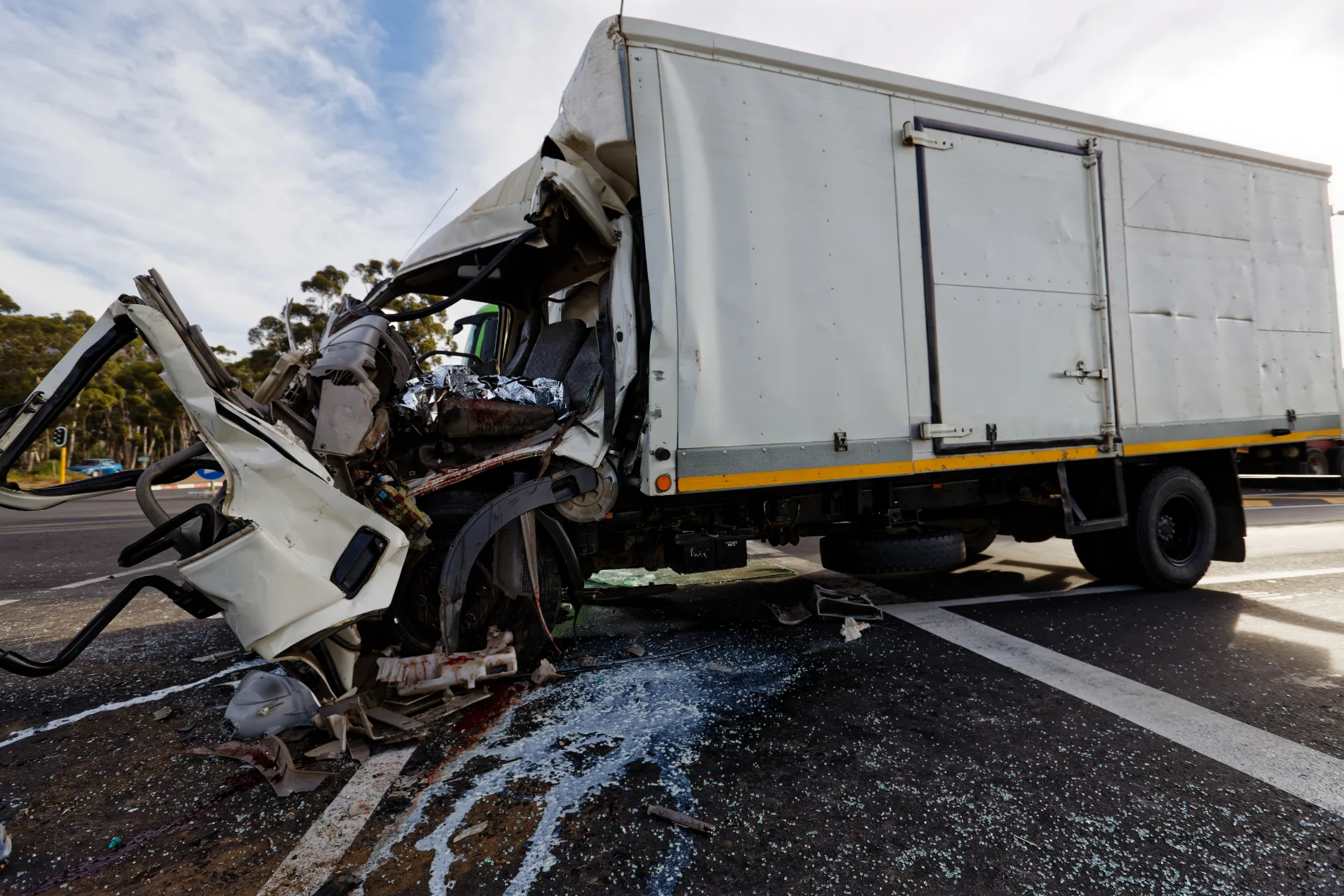
A jackknife truck accident is a collision in which a semi-truck’s tractor and trailer fold toward each other at a sharp angle, forming a V-shape that blocks multiple lanes and puts every nearby driver at serious risk. These crashes happen on Sarasota roads including I-75 and Tamiami Trail, and they often result in severe injuries, lengthy recoveries, and complex legal claims against the driver, the carrier, or both. Understanding what causes a jackknife – and how Florida law assigns fault – helps victims recognize their options after a crash.
Many people who live or drive in Sarasota want to know what causes a jackknife semi-truck crash and how these accidents happen so suddenly. Understanding the reasons behind jackknifing can help victims make sense of what went wrong and the options available to them afterward.
Contact us today at 941-559-4529 to discuss your case and learn how we can help you.
Injured in a jackknife truck accident on I-75 or Tamiami Trail? These crashes involve complex liability against drivers and carriers. Contact Greg Linehan Law today for a free case evaluation.
Key Takeaways
- A jackknife truck accident occurs when the tractor and trailer fold into a V-shape – blocking multiple lanes and putting every nearby driver at serious risk of injury.
- There are two distinct types: tractor jackknifes, where the cab loses control first, and trailer jackknifes, where the trailer swings out and forces the cab to follow.
- The most common causes include sudden braking, wet roads, speeding, defective brakes, and shifting cargo – all of which are preventable and can establish negligence against the driver or carrier.
- On Sarasota roads like I-75 and Tamiami Trail, summer rain and tourist congestion increase jackknife risk especially during Florida’s rainy season from June through September.
- Florida’s comparative fault law (Fla. Stat. § 768.81) governs how responsibility is divided – FMCSA brake violations under 49 CFR Part 393 can constitute negligence per se, strengthening a victim’s claim.
- Greg Linehan Law represents Sarasota jackknife accident victims with nearly 30 years of experience, working with accident reconstructionists and medical experts to build evidence-based claims.
What Is a Jackknifed Truck?
A jackknifed truck is a semi-truck in which the tractor and trailer have folded toward each other at a sharp angle, forming a V-shape that the driver cannot correct once it begins. The term comes from the shape a folding pocketknife makes when partially open. A jackknifed truck can block entire highways, trigger chain-reaction crashes, and put every nearby driver at serious risk.
Tractor Jackknife vs. Trailer Jackknife
There are two main types of jackknifing:
- Tractor jackknife. This occurs when the tractor loses traction with the road, typically after sudden braking or encountering a slick surface. The cab skids sideways, causing the trailer to follow. This type of jackknife often starts with the front of the truck losing control.
- Trailer jackknife. In this case, the trailer swings out first, often because the load shifts, the brakes lock up, or the trailer slides on a slippery road. The trailer pushes the tractor, forcing it to twist into a jackknife position.
Knowing the difference is the basis for understanding what causes these crashes.
How Does a Semi-Truck Jackknife?
Semi-trucks rely on traction between the tires and the road to stay in control. When the vehicle loses traction due to excessive speed, adverse weather conditions, braking issues, or driver error, the truck can fold in on itself. The moment the trailer begins to swing, the truck becomes impossible to control. The trailer may sweep across multiple lanes, collide with nearby vehicles, or cause a pileup.
Federal brake violations and carrier negligence can constitute negligence per se under Florida law - meaning the violation itself is evidence of fault. A Sarasota truck attorney can build that case for you.
Common Causes of Jackknife Accidents
Jackknife crashes have multiple causes. Here are some of the most common:
- Sudden or hard braking. When a driver slams on the brakes, the tractor slows down faster than the trailer behind it. This imbalance makes the trailer swing sideways, leaving the driver with little control.
- Wet, slick, or uneven roads. Rain, oil, or debris on the road reduces traction. If the truck’s tires lose grip, the trailer may slide out of position.
- Speeding or taking curves too fast. High speeds or tight turns put extra stress on the trailer. If the truck enters a curve too quickly, the trailer can shift or tip sideways, potentially initiating a dangerous jackknife.
- Improper braking techniques. Truck drivers must brake slowly and gradually. If they brake at the wrong time or apply too much force, the trailer may swing out of line, causing it to jackknife.
- Unbalanced or shifting cargo. The weight of improperly loaded cargo can shift during transit. If the trailer becomes unbalanced, it may push the tractor into a jackknife position.
- Worn or defective brakes. Faulty brakes prevent the driver from slowing down smoothly. If one axle locks up while the others continue to move, the truck can twist into a jackknife.
- Driver fatigue or inattention. Tired or distracted drivers can react more slowly, brake too late, or overcorrect. These mistakes can easily trigger a jackknife, especially during sudden stops or lane changes.
As this list illustrates, many jackknife crashes are linked to preventable factors such as improper braking, speeding, or poor maintenance. In Sarasota, summer rain and standing water on I-75, US-41, and SR-72 reduce tire traction sharply, making the wet-road and hard-braking causes especially common during Florida’s rainy season from June through September.
How the Causes of Jackknifing Relate to Fault in Florida
Under Florida’s comparative fault statute (Fla. Stat. § 768.81), a victim’s compensation may be reduced in proportion to their own share of fault – making it critical to establish the trucking company’s duty of care and proximate cause clearly. When a jackknife results from brake failure, FMCSA brake regulations under 49 CFR Part 393 set the maintenance standard the carrier must meet. Violations of those federal standards can constitute negligence per se under Florida law, meaning the violation itself serves as evidence of fault. A carrier whose driver causes a jackknife on I-75 or SR-72 in Sarasota County may also face vicarious liability under the doctrine of respondeat superior for the driver’s conduct.
A Sarasota personal injury attorney can investigate the cause of the jackknife crash, gather evidence of negligence, and help you hold the appropriate parties accountable.
Why Choose Greg Linehan Law After a Jackknife Accident
Greg Linehan Law represents jackknife truck accident victims in Sarasota County, building cases grounded in FMCSA regulatory analysis, accident reconstruction, and full documentation of medical and financial losses. As an experienced Sarasota truck accident lawyer, Greg brings nearly 30 years of experience and communicates directly with every client from initial investigation through resolution – whether by settlement or trial in the Twelfth Judicial Circuit.
Truck accidents require identifying who is at fault, navigating complex regulations, and dealing with insurance companies. Greg Linehan brings nearly 30 years of experience representing injured people in Sarasota. He prepares each case with careful attention, works with respected consultants in accident reconstruction and medical analysis, and communicates directly with clients throughout their case. From mediation to litigation, Greg is ready to fight for the compensation you deserve.
Our team helps Sarasota victims pursue compensation and rebuild their lives after serious truck accidents.
Call 941-559-GLAW (4529) or fill out our online contact form to schedule a consultation today.
Frequently Asked Questions
What Does a Jackknifed Semi Mean?
The semi-truck jackknife is when the tractor and trailer of a large commercial vehicle fold toward each other at a sharp angle, forming a V-shape. This happens when the truck loses traction or control, causing the trailer to swing out of alignment and making the vehicle impossible to steer safely.
What Are the Two Types of Jackknifing?
The two types are tractor jackknifing, where the cab loses control first, and trailer jackknifing, where the trailer swings out of position.
What Causes Jackknifing?
Jackknifing happens when a truck’s tires lose traction on the road. Sudden braking, speeding, wet roads, shifting cargo, brake problems, and driver fatigue are often the causes of these accidents.
Is Jackknifing a Trailer Bad?
Yes. When a trailer jackknifes, it can sweep across lanes, strike nearby vehicles, block traffic, and cause severe or fatal injuries.